


Last updated: October 2026 Written by the LiftKitGuide Team, truck suspension installers and editors
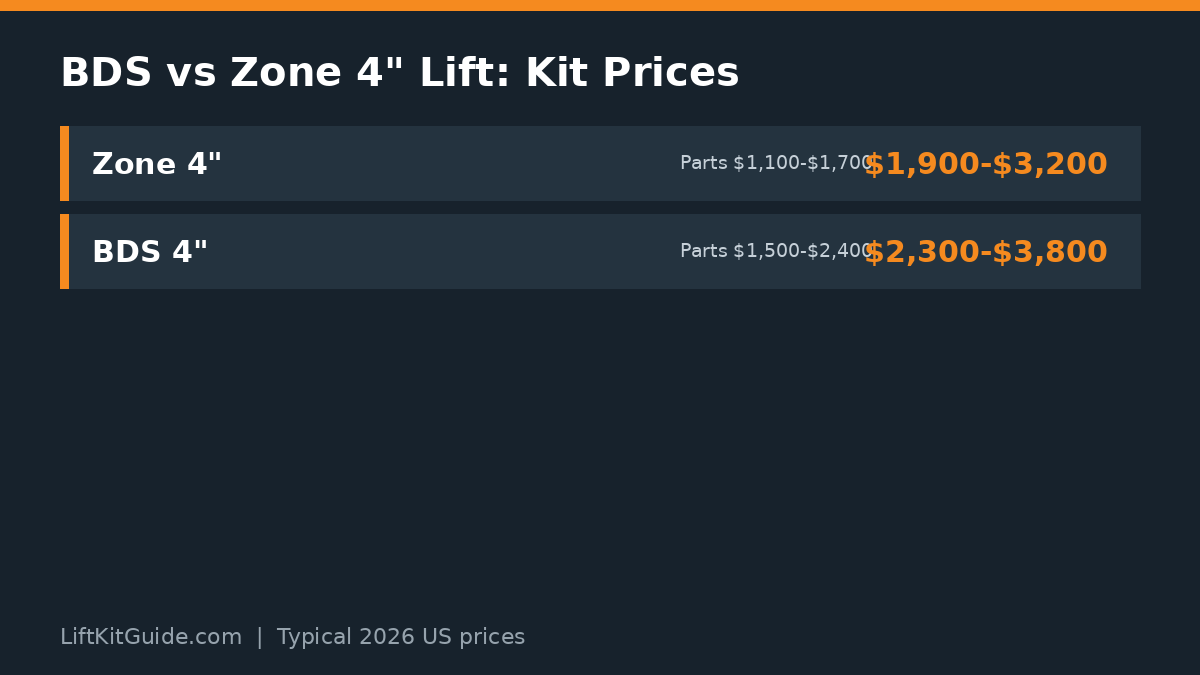
The bds vs zone 4 inch lift decision comes down to whether the BDS premium is worth it for your truck. BDS 4-inch kits typically cost $1,500 to $2,400 while comparable Zone 4-inch kits run $1,100 to $1,700, a gap of roughly $400 to $700. Both brands are owned by Fox Factory and share engineering DNA, but BDS includes more new components, offers coilover and Fox shock upgrades, and backs everything with its No Fine Print lifetime warranty plus a 5-year, 60,000-mile drivetrain warranty. Zone counters with a limited lifetime warranty and the best bang-for-buck reputation in the segment.
Key takeaways
- BDS 4-inch kits run $1,500-$2,400; comparable Zone 4-inch kits run $1,100-$1,700.
- Both brands are owned by Fox Factory (BDS acquired 2014); Zone is the value line.
- BDS includes its No Fine Print lifetime warranty plus a 5-year/60,000-mile drivetrain warranty.
- BDS kits include more new components and Fox/coilover shock upgrades; Zone reuses more factory parts.
- Zone is widely considered the best bang-for-buck 4-inch lift for street-driven trucks.
On this page
What is the real price difference in a bds vs zone 4 inch lift?
The bds vs zone 4 inch lift price gap is consistent across applications: roughly $400 to $700. A BDS 4-inch kit for a Ford F-150 lists around $1,778, while the equivalent Zone kit typically lands $400-plus lower. For a Chevy Trail Boss or GMC AT4, BDS 4-inch kits run about $2,171, with Zone again undercutting by several hundred dollars. On a Ram 2500 diesel, Zone 4-inch kits list between $1,300 and $1,560 depending on shock choice.
Installed, the gap narrows slightly because labor is similar: expect $700 to $1,200 for a professional 4-inch install plus alignment on either brand. That puts a Zone 4-inch setup at roughly $1,900 to $3,200 out the door and BDS at $2,300 to $3,800. Our lift kit installation cost guide breaks down where the labor hours go on a drop-bracket kit.
Application-specific pricing is worth understanding in the bds vs zone 4 inch lift comparison. Diesel trucks, four-wheel-drive models, and specialty trims like the Trail Boss all carry different part numbers and prices. A Zone 4-inch kit for a Ram 2500 diesel lists around $1,300 to $1,560, while the BDS equivalent runs several hundred more. Always price your exact configuration rather than relying on generic advertised prices, and confirm whether the quoted price includes shocks or assumes you will add them separately.
How do BDS and Zone 4-inch kits differ in components?
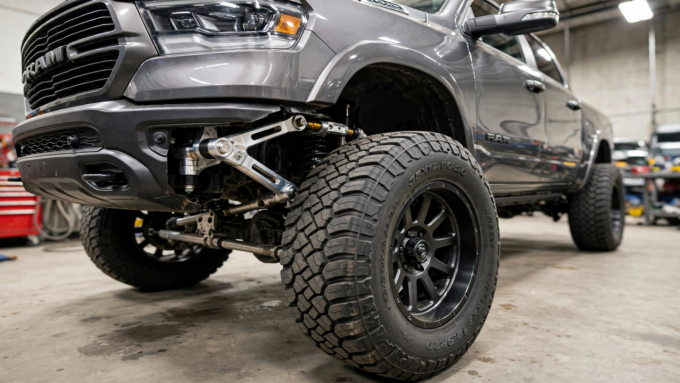
Component count is where the bds vs zone 4 inch lift money shows up. BDS kits are engineered as complete systems: 1/4-inch laser-cut steel crossmembers, CNC-machined ductile-iron steering knuckles, heavy-duty tie-rod ends, differential drop brackets, front and differential skid plates, and often new performance upper control arms. Everything is designed to work together, and the kit is certified compliant with FMVSS No.126 so it does not adversely affect electronic stability control.
Zone kits use the same drop-bracket architecture but trim the bill of materials to hit the lower price. You may reuse factory control arms, get simpler twin-tube shocks instead of premium options, and skip some skid plates. As one RamForum member put it, Zone is the best bang for your buck with good quality parts, while BDS is the step up with the most shock and coilover options. If you are comparing lift kit brands broadly, BDS sits in the premium tier and Zone leads the value tier.
Shipping costs can surprise first-time buyers. A complete 4-inch kit ships in multiple heavy boxes, and freight can add $100 to $200 depending on your location. Some retailers offer free shipping thresholds that cover kits; others do not. Factor this into your comparison, because a cheaper kit with expensive shipping is not actually cheaper.
| Component | BDS 4-inch | Zone 4-inch |
|---|---|---|
| Front crossmembers | 1/4 in. laser-cut steel | Steel, similar design |
| Steering knuckles | CNC ductile iron | Ductile iron |
| Upper control arms | Often included (performance series) | Often reuses factory arms |
| Skid plates | Front + differential included | Limited or optional |
| Shock options | NX2, Fox 2.0, coilovers | Twin-tube, Fox upgrade |
| ESC compliance | FMVSS 126 certified | Varies by kit |
Is the BDS No Fine Print warranty worth the extra money?
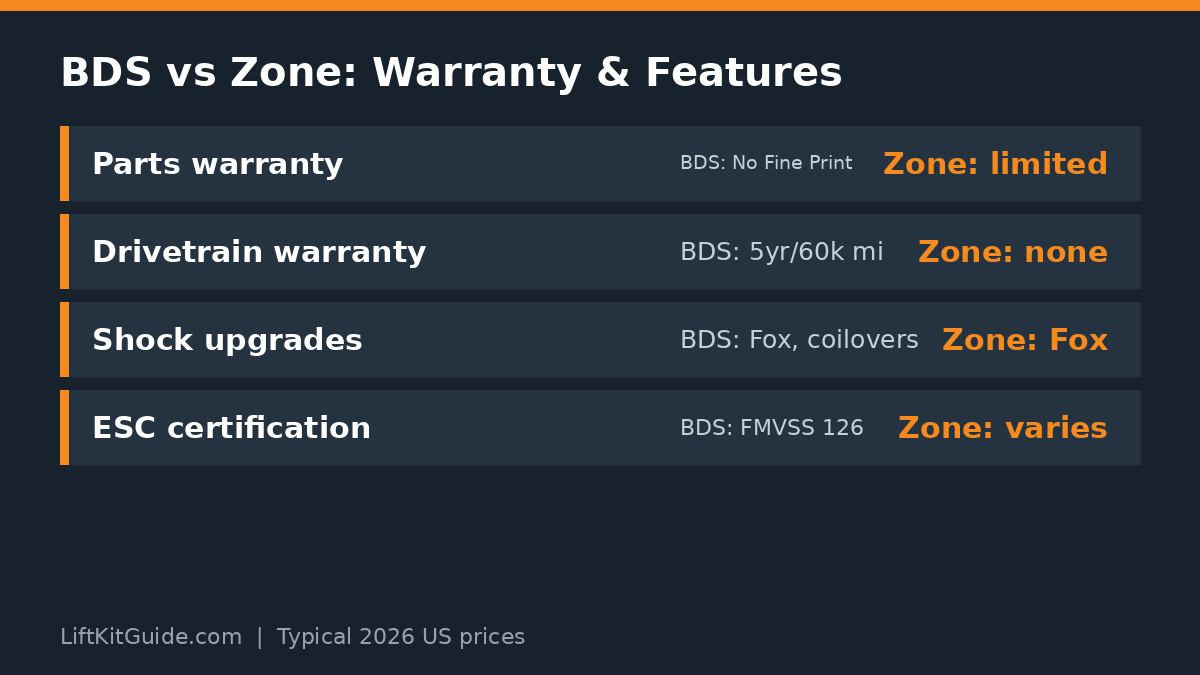
This is the heart of the bds vs zone 4 inch lift debate for many buyers. BDS’s No Fine Print warranty is simple: if you are the original purchaser and a BDS part breaks, they give you a new part, period. On top of that, Factory Protection Plus adds a 5-year, 60,000-mile drivetrain warranty on most kits, and up to 100,000 miles on some applications, covering issues the lift might cause to the truck itself.
Zone’s limited lifetime warranty is genuinely good for the price tier, and owners report solid support. But it has more exclusions, no drivetrain coverage, and less of the consequential-damage protection that makes the BDS warranty famous. If you tow heavy, wheel hard, or plan to keep the truck past 100,000 miles, the BDS warranty alone can justify the premium. For a street truck that sees dirt roads on weekends, Zone’s coverage is plenty. Either way, check our lift kit warranty guide so you understand how the Magnuson-Moss Act interacts with aftermarket parts.
The warranty question in the bds vs zone 4 inch lift debate extends beyond the printed terms to how claims actually get handled. BDS has a reputation for no-drama replacements, with owners reporting broken brackets replaced quickly and minimal paperwork. Zone’s support gets solid marks too, though the process can involve more back-and-forth. Document your install with photos and keep the original receipt regardless of brand; warranty claims without proof of purchase get complicated fast with either company.
Which rides better: BDS or Zone 4-inch?
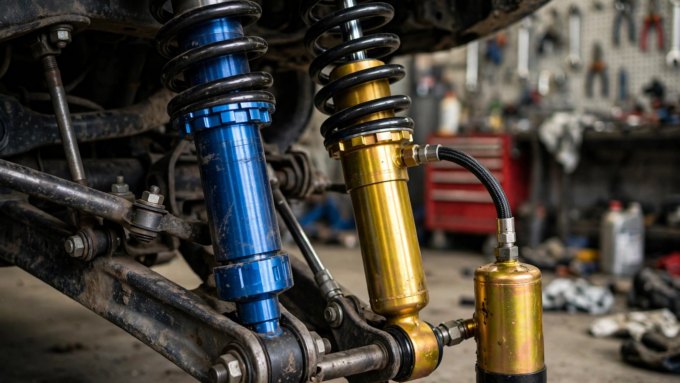
Ride quality comes from shocks and springs, not the logo on the crossmember. With base twin-tube shocks, both kits ride close to stock, and most daily drivers would struggle to tell them apart blindfolded. The BDS advantage appears when you option up: Fox 2.0 performance shocks or a BDS coilover conversion transform small-bump compliance and high-speed stability in ways the Zone base shocks cannot match.
That said, the upgrade path is open on both sides. Because both brands live under Fox Factory, Zone kits commonly accept Fox 2.0 shocks as a later upgrade, and many owners do exactly that: buy Zone now, add Fox dampers in a year or two. If ride quality is your top priority, price a BDS kit with Fox shocks against a Zone kit with Fox shocks; the remaining gap is mostly brackets, arms, and warranty. Our 6-inch lift cost article shows the same shock-tier math at taller heights.
Spring rates and load handling separate the bds vs zone 4 inch lift options in subtle ways. BDS offers more spring and coilover configurations, letting you match the kit to your truck’s actual use, from empty daily driver to constant towing. Zone’s simpler lineup covers the common cases well but offers fewer tuning options. If your truck wears a heavy aftermarket bumper and winch up front, the BDS coilover option lets you dial in ride height precisely rather than accepting whatever a fixed kit delivers.
One final tip: photograph your stock suspension before disassembly. Those reference photos prove invaluable if you ever need to return to stock or troubleshoot an odd noise months later.
What do owners say about BDS vs Zone after years of use?
Long-term owner sentiment favors BDS, but Zone’s reputation is stronger than its price suggests. BDS owners routinely praise the finish quality, the completeness of the hardware, and warranty claims honored without drama. An in-depth BDS suspension review from experience notes the brand nails ride quality, durability, and peace of mind, calling Zone BDS’s value-oriented little brother under Fox Factory. The brand has decades of goodwill in the suspension lift kit market, and the Fox Factory ownership has only deepened the engineering bench.
Zone owners are a pragmatic bunch. The common story is a kit that installed cleanly, aligned easily, and has needed nothing but shock replacements after 60,000-plus miles. Complaints tend to center on finish wear in salt states and the simpler base shocks rather than structural issues. One widely shared takeaway from the forums: Zone is the best value 4-inch kit you can buy, and BDS is what you buy when the budget allows the best. Neither brand generates the chronic complaint threads that follow the cheapest no-name kits.
Resale value rarely decides a bds vs zone 4 inch lift purchase, but it deserves a thought. Trucks with documented premium-brand lifts tend to attract more serious buyers and slightly stronger offers than trucks with unknown budget kits. That said, install quality matters more than the brand name: a clean Zone install with receipts outsells a hacked BDS install every time. Keep your factory take-off parts if you have storage space; returning to stock remains an option at trade-in time.
- BDS strengths: complete component set, No Fine Print warranty, drivetrain coverage, Fox/coilover options.
- Zone strengths: price, clean installs, solid limited lifetime warranty, upgradeable to Fox shocks.
- Watch on BDS: premium price; some kits still use strut spacers up front.
- Watch on Zone: simpler base shocks; fewer skid plates; reuses more factory parts.
- Both: require professional alignment; plan on 33 to 35-inch tires.
Do BDS and Zone 4-inch kits fit the same trucks?
Application coverage is broad for both brands: full-size Ford, GM, and Ram 1500s, plus heavy-duty 2500/3500 trucks, Jeeps, and Toyotas. BDS lists more niche applications, including adaptive-ride-control trucks like the GMC Denali and Silverado High Country, where the kit relocates ARC sensors and shock brackets to keep the factory system functional. Zone covers the high-volume applications thoroughly but skips some of the exotic trims.
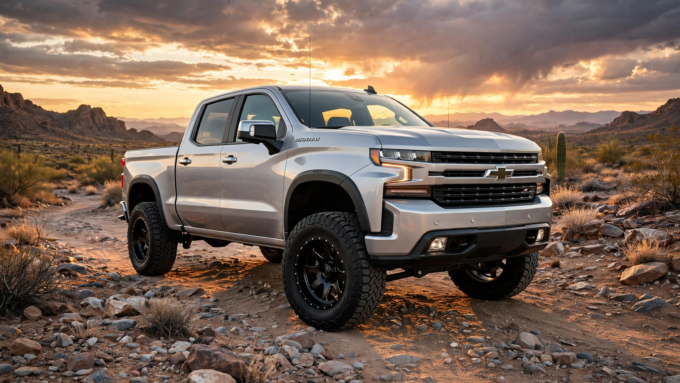
Fitment details matter at purchase time. Diesel versus gas, two-wheel versus four-wheel drive, and trim-specific suspension (Trail Boss, AT4, Power Wagon) all change the part number and price. Always order by VIN-verified application from an authorized dealer; gray-market kits can complicate warranty claims. And remember that a 4-inch kit on a Trail Boss or AT4 nets about the same stance as a 6-inch kit on a standard 1500, since those trims sit 2 inches taller from the factory.
Trim-specific engineering is an underrated part of the bds vs zone 4 inch lift story. BDS invests in applications like adaptive-ride-control Denalis and Trail Boss models with factory 2-inch lifts, relocating sensors and brackets to keep electronic systems happy. Zone focuses on high-volume applications where the engineering is straightforward. If your truck has adaptive dampers, air suspension, or other electronic chassis systems, verify compatibility carefully; the wrong kit can trigger warning lights that no alignment will fix.
| Application | BDS 4-inch | Zone 4-inch |
|---|---|---|
| Ford F-150 4WD | $1,700-$2,200 | $1,200-$1,600 |
| Chevy Silverado 1500 | $1,800-$2,400 | $1,300-$1,700 |
| Ram 1500 | $1,600-$2,100 | $1,100-$1,500 |
| Ram 2500 diesel | $2,000-$2,600 | $1,300-$1,600 |
Which 4-inch kit should you buy for towing and daily driving?
For towing and daily driving, the bds vs zone 4 inch lift answer leans BDS if the budget stretches. The heavier-duty brackets, the option of Fox 2.0 or coilover damping, and the drivetrain warranty matter when you are pulling a camper or boat with a lifted truck. The FMVSS 126 ESC certification is also meaningful for a family daily driver, since it documents that the kit was tested against stability-control interference.
For a street-driven truck that tows occasionally, Zone plus a shock upgrade is the value play that forum veterans recommend again and again. You get the stance, the clearance for 33s or 35s, and money left over for tires. Whichever you choose, budget for the full project: kit, install, alignment, wheels, tires, and a speedometer recalibration. Our cost to lift a truck guide totals the real out-the-door numbers so there are no surprises.
If your truck is still under factory warranty, understand the legal angle. A lift cannot void your entire warranty, but the dealer can deny specific claims they can link to the modification. The BDS warranty covers the kit itself, not your factory powertrain. Keep this distinction clear in your mind before you sign the work order.
How does the bds vs zone 4 inch lift choice affect resale?
Resale is an underrated part of the bds vs zone 4 inch lift math. A truck with a documented BDS kit, installed by a reputable shop, tends to photograph better in listings and inspire more buyer confidence than a truck with an unknown budget kit. The transferable reputation of the No Fine Print warranty, even though it technically covers the original purchaser, still signals quality to a second owner.
Zone-equipped trucks sell fine too, especially when the listing shows the install receipt and alignment printout. The depreciation hit comes from hack-job installs, not from choosing the value brand. Keep every receipt, photograph the install, and keep the factory parts if you have storage space; returning a truck to stock is the single best resale move regardless of which kit you bought.
Timing your purchase can save real money on a bds vs zone 4 inch lift. Both brands run promotions around major off-road events and holidays, with discounts of 10 to 15 percent being common. Buying the kit and scheduling the install in the same transaction sometimes unlocks package pricing at 4×4 shops. Avoid the cheapest online gray-market sellers; unauthorized dealers can void the warranty you are paying extra for, which defeats the entire purpose of choosing BDS in the first place.
Frequently asked questions
Are BDS and Zone owned by the same company?
Yes. Fox Factory Holding Company acquired BDS Suspension in 2014, and Zone Offroad operates under the same corporate umbrella. The brands share some engineering resources, but BDS remains the premium line with more complete kits and stronger warranty coverage.
What does the BDS No Fine Print warranty actually cover?
BDS's No Fine Print warranty means that if you are the original purchaser and a BDS part breaks, they replace it, period. It covers hard parts like brackets, control arms, and knuckles; shocks and wear items carry separate warranties. Zone's limited lifetime warranty is also strong but has more exclusions.
Is a BDS 4-inch lift certified not to affect stability control?
Yes. BDS's Factory Protection Plus includes FMVSS No.126 compliance certification, meaning the kit is tested not to adversely affect the factory electronic stability control system. This matters for insurance and liability on a daily-driven truck.
How much does a Zone 4-inch lift cost installed?
Typically $1,100 to $1,700 for the kit, or $1,900 to $3,200 installed with an alignment. The Zone kit's simpler component list keeps both parts and labor slightly lower than a comparable BDS setup.
Does Zone hold up as well as BDS long term?
For street-driven trucks with light off-road use, most owners report the Zone kit holds up well for years. The BDS advantage shows under hard use: heavier-duty brackets, better shock options, and a warranty that covers consequential drivetrain issues give it the edge for towing and trail work.
Can you upgrade a Zone kit with BDS or Fox shocks later?
Often yes. Because both are Fox Factory brands, Zone kits frequently accept BDS or Fox shocks as upgrades. Many owners start with a Zone kit and add Fox 2.0 or BDS coilovers later, which is a cost-effective upgrade path.
The bottom line
The bds vs zone 4 inch lift question has a clear answer once you price it honestly: BDS costs roughly $400 to $700 more for genuinely better components, more shock choices, and the No Fine Print warranty. For a truck you will keep for years, tow with, or take off-road, that premium pays for itself in durability and peace of mind.
Zone remains a smart buy for budget builds and street-driven trucks. You get the same drop-bracket geometry, a real limited lifetime warranty, and a stance that turns heads for meaningfully less money. Just go in knowing you may reuse some factory parts and get simpler shocks. Either way, buy from an authorized dealer, keep your receipt, and register the warranty.




Leave a comment