



Last updated: October 2026 Written by the LiftKitGuide Team, truck suspension installers and editors
Suspension lift kits raise a truck by replacing or modifying its springs, shocks, and related suspension parts, rather than simply lifting the body off the frame. Suspension lift kits typically add 2 to 6 inches or more, create room for 33- to 37-inch tires, and can increase frame clearance and suspension travel. In 2026, parts generally cost $500 to $6,000 or more, while common installed totals range from $1,200 to $5,000 depending on height, truck, and component quality.
Key takeaways
- Suspension lift kits create real height at the suspension and typically range from 2 inches to 6 inches or more.
- A 2- to 3-inch system commonly clears 33-inch tires, while 6-inch bracket lifts can make room for 35- to 37-inch tires.
- Parts cost $500 to $6,000 or more in 2026; typical installed totals range from $1,200 to $5,000 for common half-ton setups.
- An alignment is mandatory after installation, and regearing deserves consideration when moving to tires of 35 inches or larger.
- Quality kits include truck-specific damper tuning, geometry correction, alignment specifications, and a meaningful parts warranty.

On this page
What are suspension lift kits and how do they work?
True suspension lift kits create height at the wheels by changing the parts that locate and support the truck. Taller front coil springs or coilovers raise the front, while matched rear springs or lift components raise the back. Because the frame moves up with the suspension, these kits can improve approach and departure angles and make room for taller tires. The tires matter: a larger tire is what raises the axle and differential, so lift height alone does not tell the whole clearance story.
As ride height changes, suspension lift kits must also manage geometry. A small lift may need only longer shocks and an alignment, while a taller system changes control-arm, steering, brake-line, and driveline angles enough to require correction parts. Better kits engineer those pieces as one system rather than asking the installer to improvise. That is why two kits with the same advertised height can drive very differently: one preserves usable travel and alignment range, while the other simply makes the truck taller and harsher.
What parts are included in suspension lift kits?
At the front, suspension lift kits commonly use taller coil springs, replacement struts, or complete coilovers. Coilovers combine the spring and damper, and higher-quality versions are valved for the truck’s weight and intended use. Replacement shocks must match the new extended and compressed lengths; stock-length dampers can top out or limit travel. Upper control arms may be included to restore ball-joint orientation and recover caster and camber adjustment, especially once lift height approaches or exceeds 3 inches without sacrificing alignment or travel.
Rear lift can come from an add-a-leaf, a block and longer U-bolts, or a complete replacement leaf pack. Add-a-leafs are economical but can firm the ride, blocks preserve much of the factory spring behavior, and full packs are the premium route for load and travel. Kits around 4 inches and taller may add brackets, extended sway-bar links, longer brake lines, steering correction, and driveline spacers. When comparing suspension lift kits, count every included component—not just the springs—because missing correction parts become separate purchases and extra labor.
| Part | What it does | When it matters |
|---|---|---|
| Coilovers or taller springs | Create the front lift and support the truck | Included in most complete front systems |
| Replacement shocks | Control spring movement at the new ride height | Needed when stock dampers are too short or poorly matched |
| Upper control arms | Restore ball-joint angle and alignment range | Most valuable around 3 inches and above |
| Rear blocks, add-a-leafs, or leaf packs | Raise the rear to match the front | Choice depends on budget, load use, and ride goals |
| Brackets and steering correction | Relocate components and control taller-lift geometry | Common on 4-inch and larger systems |
How do suspension lift kits differ from body lifts and leveling kits?
A body lift places spacers between the body and frame, leaving the suspension and frame at stock height. It is usually cheaper and can create tire room, but it adds no suspension travel and does not raise the frame. Suspension lift kits cost more because they replace working components and raise the chassis, yet bracket designs may drop the front differential to protect CV angles, so actual underbody gains depend on design. Our detailed body lift vs suspension lift comparison explains where each approach makes sense.
A leveling kit is narrower in purpose: it raises only the front, usually to remove factory rake, and may rely on a strut spacer or taller strut. It is a stance and mild tire-clearance change, not a full front-and-rear lift. If your goal is a level look and roughly one tire size, start with the leveling kit vs lift kit guide. Choose suspension lift kits when you need both ends raised, more travel, and clearance for a meaningful tire upgrade.
Which suspension lift height is right for your truck?
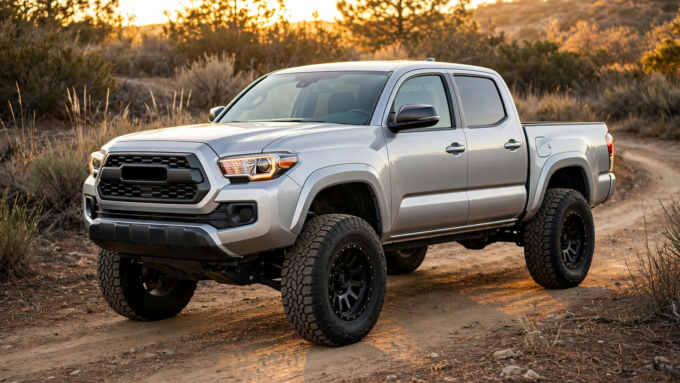
The 2- to 3-inch band is the everyday sweet spot for many trucks. These suspension lift kits usually replace front struts or coilovers, sometimes add control arms, and provide room for 33-inch tires with suitable wheel specifications. Ride quality can equal or improve on stock when damping is well matched. At 3.5 to 4.5 inches, brackets and geometry correction become more important, and 33- to 35-inch tires are realistic, although offset, bumper shape, and trimming still determine whether a tire truly clears.
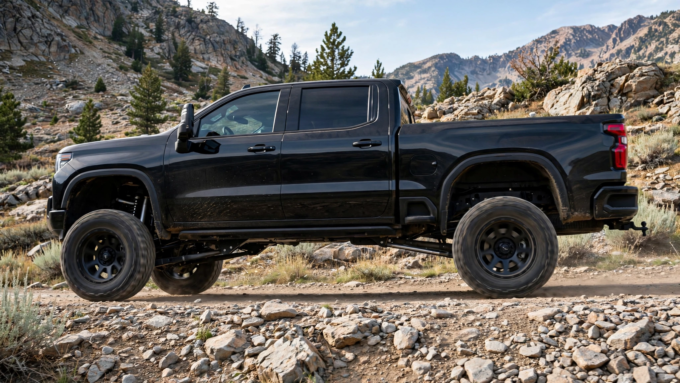
Kits at 6 inches and above are usually bracket systems. Crossmembers and the front differential are lowered to keep axle angles workable, while taller knuckles and rear components produce the stance and room for 35- to 37-inch tires. They deliver the biggest visual and trail change, but also the most cost, installation time, and follow-on decisions. Bigger suspension lift kits can affect gearing, headlight aim, parking height, fuel use, and access, so the extra height should solve a real clearance need.
| Lift height | Typical hardware | Tire potential | Best use |
|---|---|---|---|
| 2–3 inches | Replacement struts or coilovers; possible upper control arms | About 33 inches | Daily driving, mild trails, and moderate tire upgrades |
| 3.5–4.5 inches | Coilovers, control arms, brackets, and steering correction | 33–35 inches | More clearance and travel without a full bracket lift |
| 6 inches and above | Bracket lift with crossmember drops and taller knuckles | 35–37 inches | Maximum stance, larger tires, and serious trail builds |
How much do suspension lift kits cost in 2026?
In 2026, suspension lift kits range from about $500 for a basic parts package to $6,000 or more for premium, height-specific systems with high-end dampers. A typical 2.5-inch coilover setup costs $1,200 to $2,800 installed. A 4-inch system commonly totals $2,000 to $4,500, and a 6-inch half-ton lift is typically $2,500 to $5,000 installed. Those are planning ranges, not quotes: diesel trucks, rust, worn parts, and options such as remote-reservoir shocks can move the bill.
Labor is not a minor line item because a complete installation includes disassembly, replacement parts, torque checks, and an alignment. The suspension lift kit installation cost guide breaks down professional labor, while our broader guide to how much it costs to lift a truck helps budget tires and supporting work. When you compare suspension lift kits, compare installed totals with the same shocks, control arms, rear method, alignment, and warranty—not just the advertised box price before approving any quote.

How do suspension lift kits affect ride, alignment, and gearing?
Ride quality is determined less by height than by spring rate, damper tuning, travel, and alignment. Well-designed suspension lift kits can feel controlled and comfortable, while a tall kit with mismatched shocks or insufficient droop can feel harsh over broken pavement. After installation, a professional alignment is mandatory because camber, caster, toe, and steering-center all change. Headlights should also be aimed, particularly on taller trucks, and the shop should supply final alignment numbers rather than simply saying the truck is within spec.
Tire size drives the next decision. Many owners can run 33s on the factory gearing without complaint, but 35-inch and larger tires increase effective gearing, weight, and braking demand. At that point, regearing deserves a quote because it can restore acceleration and reduce transmission hunting, especially on trucks that tow or live in hills. Suspension lift kits do not automatically require new gears, yet choosing tires first prevents buying a lift and discovering the finished truck feels under-geared on every drive.
How can you tell whether suspension lift kits are good quality?
Quality suspension lift kits make their engineering visible. The shocks are valved for the specific truck—not merely extended to fit—and respected damper brands include Bilstein, Fox, and Icon. Geometry-correction parts are included where the height requires them, and the manufacturer provides alignment specifications instead of leaving the shop to improvise. Hardware, instructions, torque values, and application limits should be specific to the year, cab, drivetrain, and engine rather than a vague fits-most claim for the complete vehicle configuration.
A parts warranty matters because coils, bushings, ball joints, and dampers live in a hard environment. For a real-world example of a complete model-specific package, see a complete 3-inch BDS kit for the Ram 2500, which shows how a manufacturer bundles height and chassis components around one application. Do not assume every similarly priced kit includes the same pieces. The cheapest box can become the expensive route once control arms, brake lines, or replacement shocks are added separately before the installation begins.
- Truck-specific valving: dampers are tuned for the application, not simply made longer.
- Geometry correction: control arms, brackets, or steering parts are included when the height requires them.
- Published alignment specs: the manufacturer tells the shop what settings to target.
- Matched component lengths: shocks, brake lines, and links suit the new travel range.
- Parts warranty: coverage and exclusions are stated before you buy.
What should you check before buying suspension lift kits?
Start with the truck, not the advertised height. Year, trim, engine, cab, bed, drivetrain, factory suspension package, and existing tire size can all change the correct kit. That model-specific approach is why suspension lift kits listed in our Toyota Tacoma lift kit guide, Ford F-250 suspension lift kits, and Dodge Ram 2500 suspension lift guide are not interchangeable merely because they advertise the same number of inches. Verify load rating if you carry a camper, plow, steel bumper, or constant cargo.
Next, define the tire and job before choosing height. A truck that commutes and runs forest roads may be happier on a quality 2.5-inch setup than a tall bracket kit, while a dedicated trail build can justify 4 to 6 inches and the supporting parts. Check garage and parking height, step-in height, trailer setup, and state equipment rules. The best suspension lift kits are the ones that clear your intended tire and terrain without adding height you have to pay for every day over the long term.
Are suspension lift kits worth it?
For owners who need tire clearance, better angles, and more capable suspension, suspension lift kits are worth the money when the system is matched to the truck. They are less convincing as a cosmetic-only purchase because the costs do not end with the box: installation, alignment, larger tires, possible gearing, and more expensive replacement components follow. A smaller, high-quality kit usually delivers more satisfaction than the tallest cheap kit, especially if the truck spends most of its life on pavement.
Set the budget around the finished truck, then buy once. Reserve money for alignment and any worn ball joints, tie rods, bushings, or brakes the installer finds; lifting tired parts only makes their condition more obvious. If those repairs consume the budget, delay the lift rather than deleting essential correction components. Done as a complete system, suspension lift kits can transform capability and stance while staying predictable on the road. Done by price alone, they can become an avoidable collection of compromises.
Frequently asked questions
What is included in a suspension lift kit?
Most suspension lift kits include taller front springs or coilovers, matched shocks, a rear lift method such as blocks, add-a-leafs, or leaf packs, and the hardware needed for installation. Taller kits may also include upper control arms, drop brackets, extended sway-bar links, longer brake lines, steering correction, and driveline spacers. Always compare the complete parts list, because advertised height alone does not reveal what is in the box.
How much do suspension lift kits cost installed?
Common installed totals in 2026 are $1,200 to $2,800 for a 2.5-inch coilover setup, $2,000 to $4,500 for a 4-inch system, and $2,500 to $5,000 for a 6-inch lift on a half-ton truck. Parts alone range from about $500 to $6,000 or more. Your quote depends on the truck, damper quality, rear lift method, labor, alignment, and whether worn components need replacement.
Do suspension lift kits ruin ride quality?
No. Suspension lift kits do not automatically ruin ride quality. A well-matched system with correct spring rates, truck-specific shock valving, usable travel, and a proper alignment can ride as well as stock or better. Poorly matched dampers, excessive preload, inadequate droop travel, or missing geometry correction are what usually make a lifted truck harsh, vague, or difficult to align.
What size tires can I run with a suspension lift?
A 2- to 3-inch lift commonly makes room for 33-inch tires, a 3.5- to 4.5-inch lift can support 33- to 35-inch tires, and a 6-inch bracket lift may clear 35- to 37-inch tires. Wheel width and offset, bumper and fender shape, mud flaps, and trimming can change the result, so confirm the exact tire and wheel package for your truck before ordering.
Do I need an alignment or regear after a suspension lift?
An alignment is mandatory after installing suspension lift kits because ride-height changes affect camber, caster, toe, and steering position. Regearing is not mandatory for every build, but it should be considered with tires of 35 inches or larger, particularly if acceleration suffers, the transmission hunts between gears, or the truck tows regularly. Choose the tire size first, then decide whether the factory gearing still suits the finished truck.
Is a suspension lift better than a body lift?
A suspension lift is better when you want greater frame clearance, more suspension travel, and a system designed around larger tires. A body lift is cheaper and can create fender room, but it leaves the frame and suspension at stock height and adds no travel. The right choice depends on whether you need working clearance and suspension performance or simply room for a modestly larger tire at the lowest cost.
The bottom line
Suspension lift kits are the right choice when you want real height, tire clearance, and suspension function—not just a body raised on spacers. For most dual-purpose trucks, a well-engineered 2- to 4-inch system offers the best balance; 6-inch and taller kits make sense when 35- to 37-inch tires and trail clearance are genuine requirements.
Budget for the complete job: quality parts, professional installation, alignment, tires, and gearing if your tire choice demands it. Compare suspension lift kits by included geometry correction, damper quality, specifications, and warranty, and the result will be a truck that works as well as it looks.





19 Comments