


Last updated: October 2026 Written by the LiftKitGuide Team, truck suspension installers and editors
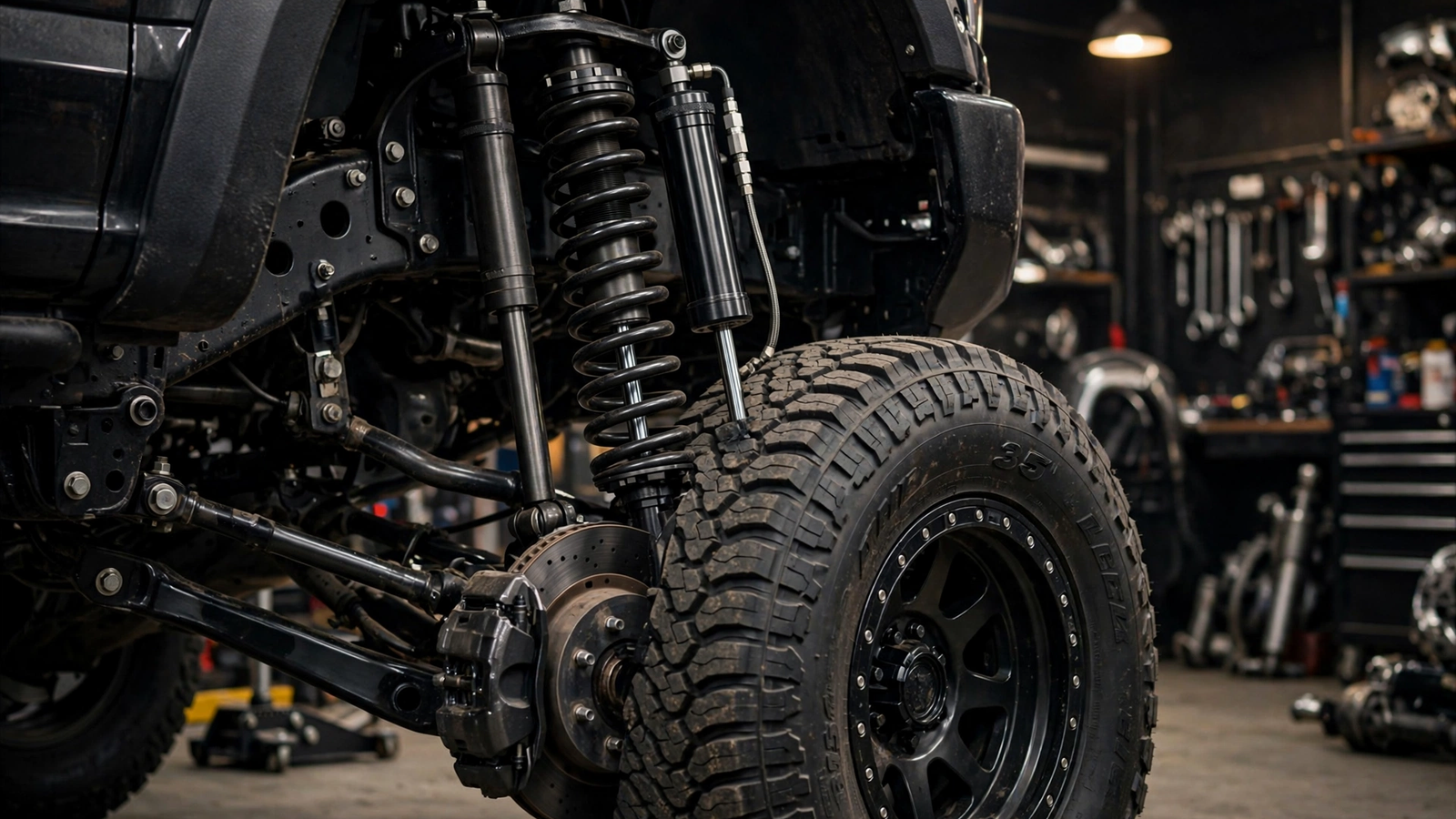
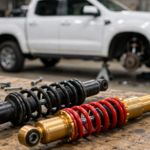
Do you need new shocks with a 6 inch lift? Yes — absolutely, with no exceptions. Six inches of lift moves the shock mounts about 6 inches farther apart, which no stock-length shock can span; most will not even reach between the mounts during installation. Every reputable 6-inch kit either includes extended-length shocks or states in its instructions that factory shocks must be replaced. Budget $400 to $800 for a quality set of four extended shocks if your kit does not include them.
Key takeaways
- At 6 inches of lift, new extended shocks are mandatory — stock shocks physically cannot span the relocated mounts.
- Most 6-inch kits are sold with or without shocks; the no-shocks version assumes you will supply extended units yourself.
- Relocation brackets recover only 1–2 inches of mount distance — they complement longer shocks, they do not replace them.
- A quality set of four extended shocks costs $400–$800; premium Fox 2.0 or King setups run $800–$2,000+.
- Never install a 6-inch lift planning to add shocks later — the truck cannot be safely assembled without them.
On this page
Do you need new shocks with a 6 inch lift?
Do you need new shocks with a 6 inch lift? Unlike smaller lifts where the answer has some nuance, at 6 inches the answer is an unambiguous yes. Six inches of suspension lift moves the shock mounting points roughly 6 inches farther apart at ride height, which is far beyond anything a stock-length shock can accommodate. No factory shock has 6 inches of spare extension travel, so reusing them is not a judgment call — it is physically unworkable.
This is why virtually every 6-inch kit on the market either includes extended-length shocks in the box or states plainly in the installation notes that factory-length shocks must be replaced. The question do you need new shocks with a 6 inch lift kit is really a question about which shocks to buy and how much to budget, because skipping them is not on the menu. Understanding why 6 inches is a hard line — and what your options cost — will save you from the most expensive mistake in big-lift builds.
First-time big-lift buyers sometimes wonder whether do you need new shocks with a 6 inch lift is one of those questions where the forum answer is stricter than reality. It is not. With smaller lifts there is genuine room for debate about extenders and stock shock reuse, but 6 inches sits far past the point where any of those compromises can physically work. Treat extended shocks as part of the kit’s purchase price from the very first budget spreadsheet, not as a surprise discovered in the install bay.
Why is a 6-inch lift different from a 3-inch lift for shocks?
The difference is one of scale. At 2 or 3 inches of lift, a stock shock is stretched uncomfortably close to its limit but can sometimes survive with extension brackets helping out. At 6 inches, the geometry gap is simply too large to bridge. A typical factory front shock offers around 3 to 4 inches of total travel from ride height to full extension; asking it to cover an extra 6 inches means it would need to be nearly twice as long as it is. Physics does not negotiate.
Six-inch kits also change far more of the suspension than smaller lifts do. Most use drop brackets or replacement steering knuckles that relocate the entire front suspension downward, along with differential drops, extended brake lines, and new crossmembers. The shocks are just one piece of a completely re-engineered system, and every reputable manufacturer sizes extended shocks specifically for the new mount geometry. Trying to shortcut this one component undermines the engineering of the other six inches of lift you just paid thousands for.
There is also a durability angle that surprises people. A 6-inch lift typically carries 35-inch or larger tires, and those heavy tire-and-wheel combos punish shocks far harder than stock sizes do. The extra unsprung weight generates more heat in the shock body on every bump, which is one reason kit manufacturers spec larger-diameter or reservoir shocks for big lifts. This is another way of saying do you need new shocks with a 6 inch lift is really two questions: do you need longer ones (yes, always) and do you need stronger ones (yes, if you run the big tires the lift was designed for).
- Mount gap too large: 6 inches of extra mount distance exceeds any stock shock’s available extension travel.
- Kit instructions require it: manufacturers like Tuff Country state plainly that factory-length shocks must be replaced.
- No bracket can bridge 6 inches: shock extenders work for 1–2 inches of lift, not for a full 6-inch relocation.
- Geometry is fully re-engineered: drop brackets and knuckles move everything, so shocks must match the new design.
- Safety systems assume correct travel: stability control and ABS calibrations expect the suspension to move through its designed range.
What happens if you try to reuse stock shocks on a 6-inch lift?
In practice, you cannot even complete the installation. With the suspension at its new ride height, stock-length shocks physically will not reach between their mounting points — the lower mount sits inches below where the shock’s extended eye can reach. Installers who have tried report having to compress the suspension with a jack just to bolt the shocks in, which leaves them permanently maxed out with zero droop travel the moment the truck sits on its own weight.
If somehow forced into place, the results are immediate and severe. The shocks act as rigid limiting straps, transmitting every bit of road harshness straight into the chassis while hammering their internal stops on any droop movement at all. Ball joints, CV axles, and tie rods take abuse they were never designed for because the shock can no longer cushion anything. Ask any installer whether do you need new shocks with a 6 inch lift and you will get the same answer: the truck cannot be safely assembled without them, full stop.
It is worth contrasting this with smaller lifts to see where the line falls. On a 2-inch level, plenty of owners reuse stock shocks for tens of thousands of miles with only mild topping out. On a 3-inch lift, stock shocks survive but ride poorly and die early. On a 6-inch lift, they do not fit at all. The progression is not linear — it is a cliff, and 6 inches is well past the edge. That cliff is exactly why kit manufacturers print the requirement in bold in their installation notes rather than burying it in fine print.
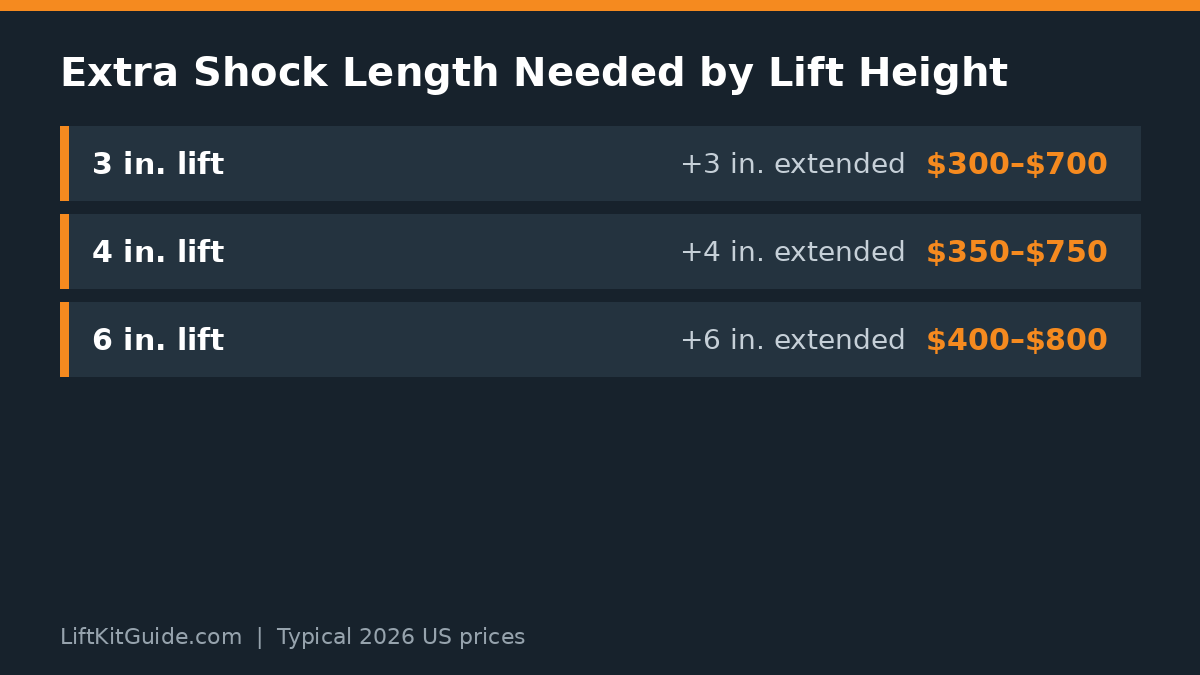
| Lift height | Extra shock length needed | Stock shocks usable? | Typical solution |
|---|---|---|---|
| 2 in. level/lift | About 2 in. | Sometimes, with extenders | Longer shocks or extenders |
| 3 in. lift | About 3 in. | Rarely — topping out likely | New longer shocks |
| 4 in. lift | About 4 in. | No | Extended shocks (usually in kit) |
| 6 in. lift | About 6 in. | Never — will not even reach | Extended shocks (required) |
Do 6-inch lift kits include new shocks?
Most do, but not all, so read the parts list carefully. Complete 6-inch systems from brands like BDS, Rough Country, and Tuff Country are commonly sold in two versions: with shocks included and without. The with-shocks version typically adds $300 to $600 to the kit price and arrives with extended-length units matched to the kit’s geometry. The without-shocks version assumes you will supply your own, which appeals to buyers who want premium Fox or King shocks instead of the kit’s house-brand units.
What you should never see is a 6-inch kit that tells you to reinstall your factory shocks. If a listing is vague about shocks, check the installation notes — reputable manufacturers state explicitly that extended shocks are required. When comparing kit prices between brands, always compare apples to apples: a kit that looks $400 cheaper may simply be the no-shocks version, and adding the missing shocks erases the apparent savings.
A related tip: some buyers deliberately choose the no-shocks kit version because they plan a premium shock upgrade from day one. That is a sound strategy — buying Fox or King extended units once beats paying for house-brand shocks you will replace in a year. Just be sure the premium shocks you order are listed for 6 inches of lift on your exact application, since extended lengths vary between kit designs and a shock built for one brand’s 6-inch geometry may not match another’s.
Do you need new shocks with a 6 inch lift if the kit has relocation brackets?
Some 6-inch kits include shock relocation brackets rather than new shocks, and this confuses buyers. These brackets move the shock’s mounting point to compensate for part of the lift — but they cannot compensate for all 6 inches. In practice, kits that use relocation brackets still require extended-length shocks; the brackets fine-tune geometry while the longer shock provides the travel. Do you need new shocks with a 6 inch lift when brackets are in the box? Yes — the brackets are a complement to longer shocks, not a substitute for them.
The math is simple: a relocation bracket might recover 1 to 2 inches of mount distance, leaving 4 to 5 inches still unaccounted for. No stock shock can stretch that far. Treat any 6-inch kit advertising as a complete system: brackets plus extended shocks working together. If a seller suggests brackets alone let you keep factory shocks on a 6-inch lift, that advice is wrong and following it will leave you with an undrivable truck. That is the complete answer to do you need new shocks with a 6 inch lift when brackets are in the picture: brackets help with geometry, but the longer shocks themselves remain non-negotiable.
Which extended shocks are best for a 6-inch lift?
Start with what the kit includes. Kit-matched shocks from Rough Country (N3 or Vertex), BDS (Fox 2.0), or Tuff Country (SX8000) are valved and sized for the kit’s exact geometry, which removes all guesswork. These typically perform well for daily driving and moderate off-road use, and they are covered under the kit’s warranty as a complete system. For most owners, the included shocks are the smart default.
Upgraders generally step to Fox 2.0 Performance Series (about $150 to $200 per shock) for better heat management and ride quality, or to King 2.5 or Icon 2.5 coilovers ($300-plus per corner) for serious off-road performance. The key specification is extended length: whatever you buy must match the kit manufacturer’s shock length spec within a fraction of an inch.
Owner forums for top lift kit brands are full of part-number cross-references if you want to verify fitment before ordering. One spec that matters more than brand at this height is shock diameter: 2.0-inch bodies are the minimum most builders recommend for 35-inch tires, with 2.5-inch reservoir units preferred for heavy trucks or desert use. And if your truck sees daily-driver duty, read up on whether a 6-inch lift suits daily driving before committing to the stiffest race-valved option.
How much do shocks for a 6-inch lift cost?
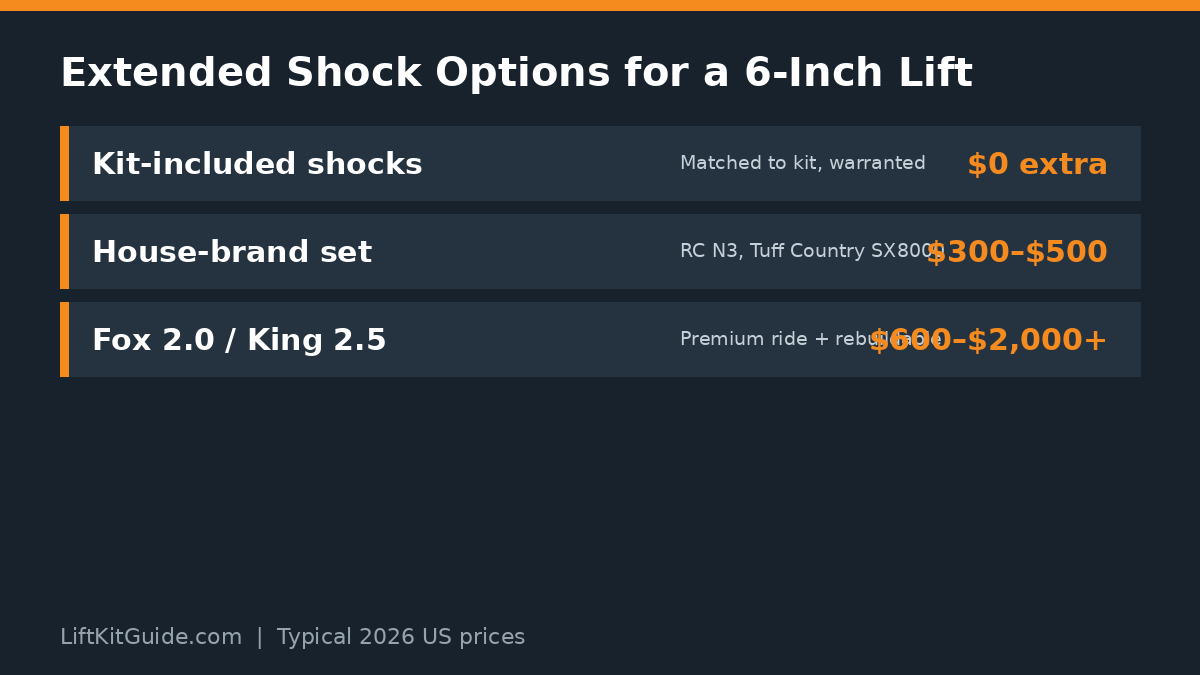
If your kit did not include them, budget $400 to $800 for a set of four quality extended shocks on most full-size trucks. House-brand extended shocks (Rough Country N3, Tuff Country SX8000) sit at the lower end of that range, while Fox 2.0 Performance Series units run toward the top. Premium 2.5-inch-diameter coilovers from King or Icon can exceed $1,500 for a full set. Professional installation adds $200 to $400 if you are not doing the work yourself, though many owners install shocks during the lift kit installation and pay no extra labor.
Remember that the shocks are a small fraction of a 6-inch lift’s total cost. The kit itself typically runs $1,500 to $3,500, installation another $800 to $1,500, and the 35-inch tires most 6-inch lifts are built for add $1,200 to $2,000. Against that total, the few hundred dollars for correct extended shocks is one of the cheapest parts of the project — and one of the worst places to cut corners, since wrong-length shocks can damage components worth far more. If you are weighing do you need new shocks with a 6 inch lift against an already stretched budget, remember that buying the shocks now is far cheaper than repairing what wrong-length shocks break. A blown shock that lets the suspension slam its stops can crack a $400 steering knuckle or tear a $300 CV boot in a single hard hit. The shocks are not where a 6-inch build saves money.
| Shock option | Typical cost (set of 4) | Notes |
|---|---|---|
| Kit-included house brand | $0 extra (in kit price) | Matched to kit geometry, warranty as a system |
| Separate house-brand set | $300–$500 | Rough Country N3, Tuff Country SX8000, Pro Comp |
| Fox 2.0 Performance Series | $600–$800 | Aluminum body, better fade resistance |
| King / Icon 2.5 coilovers | $1,200–$2,000+ | Rebuildable, best off-road performance |
Can you install a 6-inch lift without changing shocks first?
No — and any shop that agrees to try is one you should avoid. The installation physically cannot be completed with stock-length shocks because they will not reach between the relocated mounts. This is not a case where you can drive gently for a week while the new shocks ship; the truck cannot be assembled in a safe, functional state without them. Order the extended shocks with the kit, not after it.
The one legitimate sequencing question is whether to buy the kit’s included shocks or upgrade immediately. If you know you want Fox or King units eventually, buying the no-shocks version of the kit and ordering premium extended shocks once is cheaper than buying twice. If you are still asking do you need new shocks with a 6 inch lift at this point, the sequencing answer is simple: order the extended shocks with the kit, not after it. Just make sure the upgraded shocks match the kit’s length specs exactly. And if you are on the fence about whether a 6-inch lift suits a daily driver, settle that question before spending — the shocks are the least of the commitments involved.
Frequently asked questions
Will stock shocks reach on a 6-inch lift?
No. The mounts sit roughly 6 inches farther apart at the new ride height, and no factory shock has that much spare extension travel. Installers cannot even bolt them in without compressing the suspension.
Do all 6-inch lift kits come with shocks?
Most major brands offer with-shocks and without-shocks versions of their 6-inch kits. Always check the parts list — a kit that looks cheaper may simply be the no-shocks version, and you will need to buy extended shocks separately.
Can shock extenders work on a 6-inch lift?
No. Extenders recover 1–2 inches of mount distance at most, which helps on small lifts but cannot bridge a 6-inch gap. Extended-length shocks are the only correct solution at this lift height.
What length shocks do I need for a 6-inch lift?
Roughly 6 inches more extended length than stock, but buy shocks specified for your exact kit rather than measuring yourself. Kit manufacturers publish shock length specs, and mismatched lengths cause topping out or bottoming out.
Are the shocks included in 6-inch kits any good?
Kit-matched shocks from BDS, Rough Country, or Tuff Country are solid for daily driving and moderate off-road use, and they are warranted as part of the system. Enthusiasts who want more performance upgrade to Fox 2.0 or King 2.5 units in the correct extended lengths.
Do I need new shocks with a 6-inch body lift?
No. A body lift does not change suspension geometry or shock mount distances, so factory shocks work fine. New shocks are only mandatory when the suspension itself is lifted 6 inches.
The bottom line
Do you need new shocks with a 6 inch lift? There is no debate here: yes, extended-length shocks are a mandatory part of any 6-inch suspension lift. Stock shocks cannot physically span the relocated mounts, no bracket bridges a 6-inch gap, and every reputable kit either includes the right shocks or tells you to buy them.
Budget $400 to $800 for a quality extended set if your kit does not include them, buy the with-shocks kit version when the price is close, and never let a shop assemble a 6-inch lift on factory shocks. Against the total cost of the lift, tires, and installation, correct shocks are cheap insurance for the entire investment.



Leave a comment