


Last updated: October 2026 Written by the LiftKitGuide Team, truck suspension installers and editors
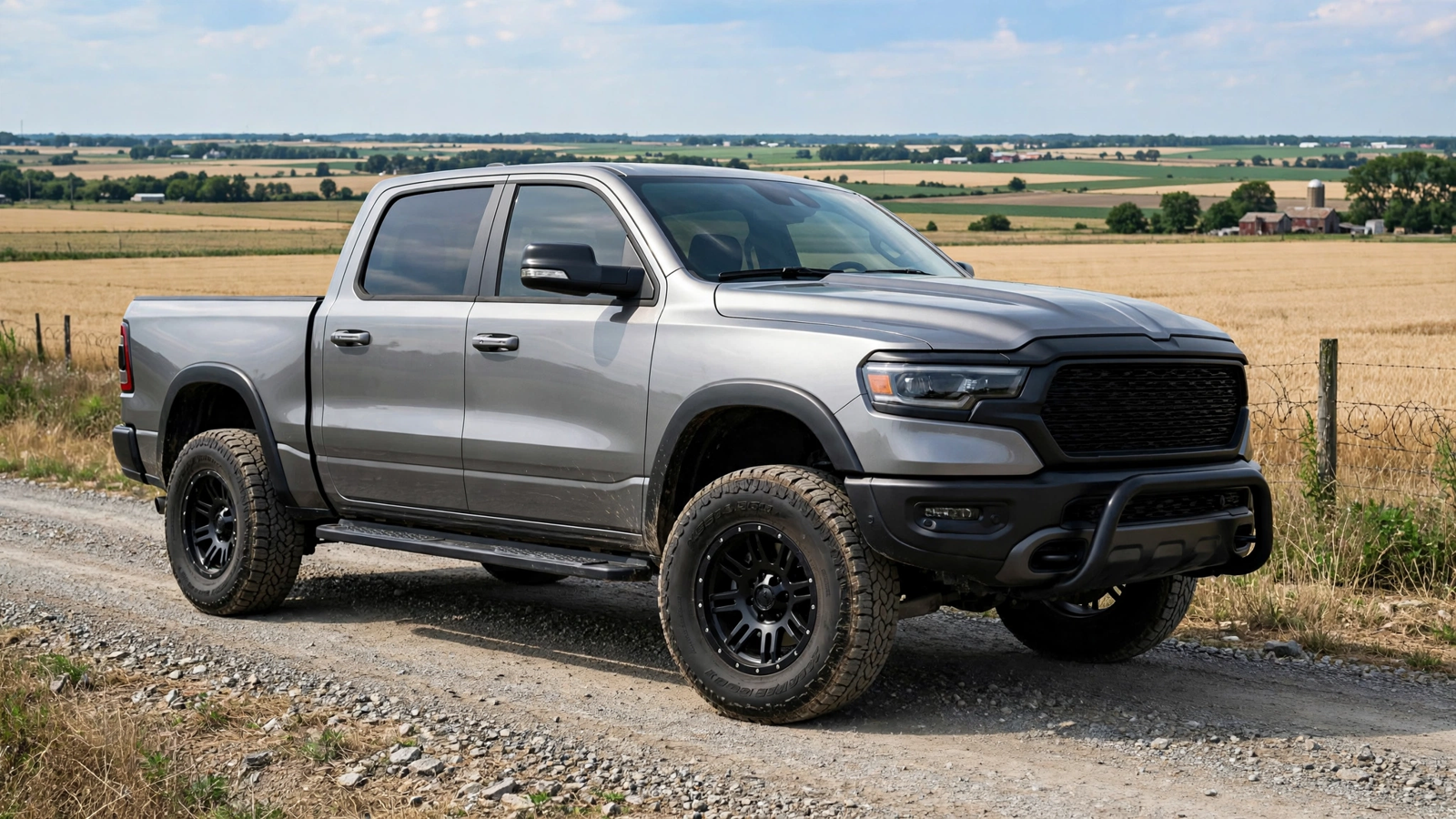
Ram 1500 lift kits range from simple 2-inch leveling spacers to full 6-inch suspension systems, and the right pick depends on your trim. For most 2019–2026 owners, a 3.5-inch kit is the sweet spot: it clears 35-inch tires, keeps factory-like road manners, and costs $1,200 to $3,000 installed. One warning before you order anything: trucks with 4-Corner Air Suspension, standard on Limited and Longhorn trims, reject most standard kits and need air-specific hardware or leveling links instead.
Key takeaways
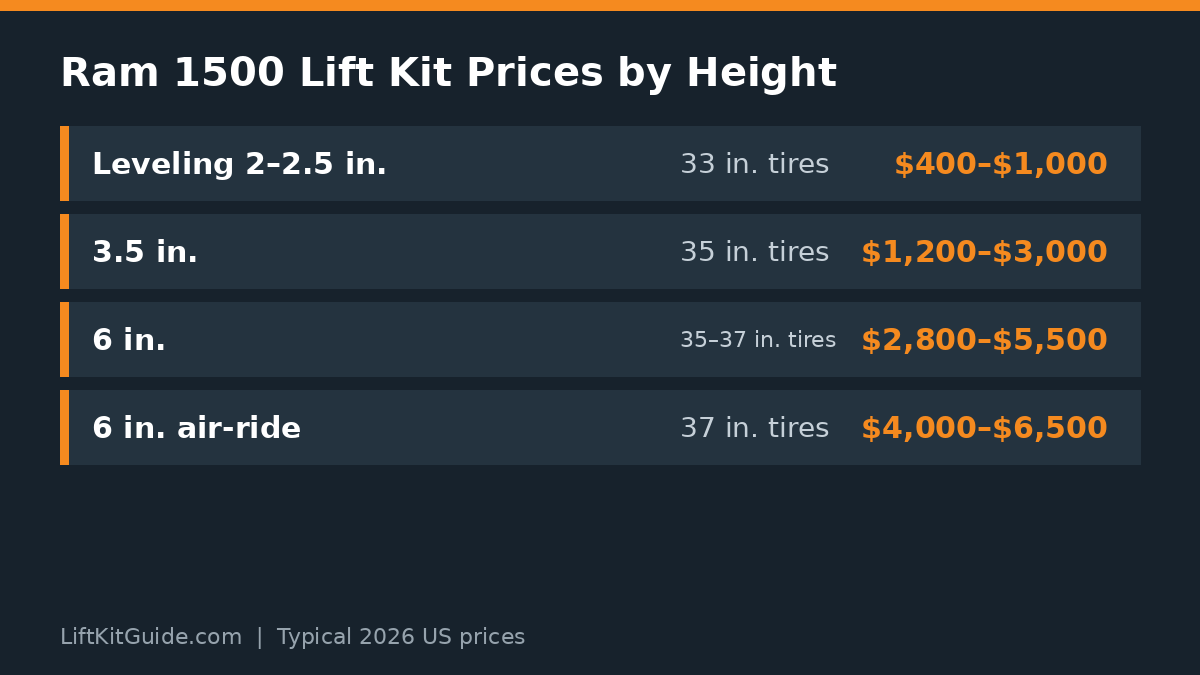
- Most 2019–2026 Ram 1500 lift kits fall into three bands: leveling kits at $400 to $1,000 installed, 3.5-inch kits at $1,200 to $3,000, and 6-inch kits at $2,800 to $5,500.
- The Ram 1500 uses rear coil springs, not leaf springs, so its kits lift the rear with coil spacers or replacement coils instead of blocks.
- 4-Corner Air Suspension trucks, standard on Limited and Longhorn, need air-specific kits or leveling links; most standard kits do not fit them.
- A leveling kit clears 33-inch tires, a 3.5-inch kit clears 35s, and a 6-inch kit clears 35s to 37s with the right wheels and minor trimming.
- Rebel, Warlock, and Off-Road Package trucks already sit 1 inch higher from the factory, which changes the lift and tire math.
On this page
What makes Ram 1500 lift kits different from Ford and Chevy kits?
The headline difference is at the back. Ford and Chevy half-tons ride on rear leaf springs, but every Ram 1500 since 2009 uses rear coil springs. That means Ram 1500 lift kits raise the rear with coil spacers or taller replacement coils instead of blocks and add-a-leafs, and the hardware is engineered around coil geometry, track bar angles, and rear control arm position. Nothing from a leaf-spring kit lines up. It is also why a well-chosen Ram kit can ride noticeably smoother than a lifted leaf-spring truck, an advantage worth protecting with quality components rather than the cheapest spacers on the shelf.
Up front, the 2019–2026 DT generation uses struts like its rivals, so leveling spacers, replacement struts, and full bracket lifts all exist. That variety is exactly why choosing among Ram 1500 lift kits starts with how your truck is built, not how tall you want it. Shoppers new to the category should first understand how suspension lift kits differ from body lifts and leveling kits, because the Ram’s coil rear suspension makes some generic advice misleading. Once the basics are clear, the decision narrows to trim, suspension type, and tire goal, which the next sections cover in order.
Which Ram 1500 trims can cause fitment problems?
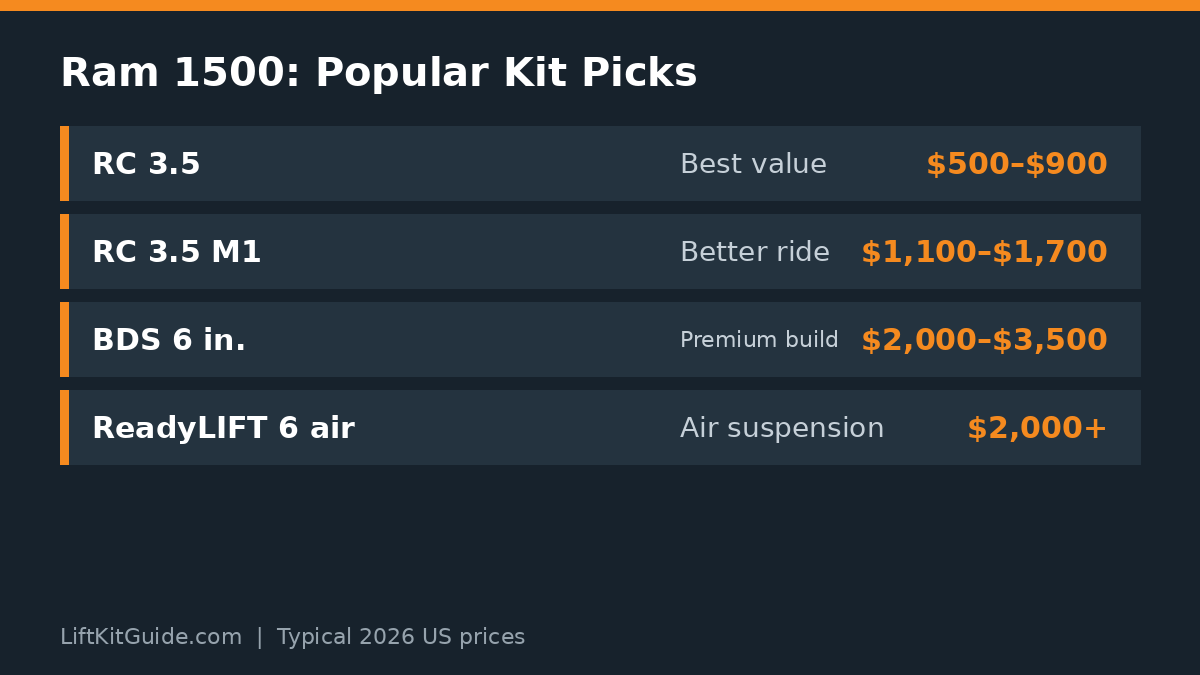
The biggest trap in the Ram 1500 lift kits market is the 4-Corner Air Suspension. It is standard on Limited and Limited Longhorn trucks and optional on several other trims, and its self-leveling air springs do not tolerate ordinary spacers and brackets, so most mainstream kits state plainly that they exclude air-ride trucks. Owners either buy an air-specific system, such as the ReadyLIFT 6-inch kit built for factory air suspension at roughly $2,000 and up for parts, or fit adjustable leveling links that work with the height sensors for a modest front raise.
Rebel, Warlock, and Off-Road Package trucks sit about 1 inch higher from the factory, so a nominal 3.5-inch kit delivers less net gain and tire clearance than the same box produces on a Big Horn. The TRX is a separate world, with long-travel suspension and adaptive Bilstein dampers that no standard kit fits. Some replacement-strut kits also exclude the 3.6L Pentastar V6 because front-end weight differs from the V8 trucks. This Rough Country 3.5-inch kit listing shows the pattern clearly: forged upper control arms, Rebel fitment included, air-suspension trucks excluded.
| Trim or option | Fitment issue | What to buy instead |
|---|---|---|
| 4-Corner Air Suspension (Limited, Longhorn, optional elsewhere) | Most standard kits do not fit the air springs | Air-specific lift kit or leveling links |
| Rebel / Off-Road Package | Sits 1 inch higher from the factory | Kit rated for the raised height; recheck tire math |
| Warlock | 1-inch factory lift | Kit that supports or accounts for the factory lift |
| TRX | Unique long-travel factory suspension | TRX-specific components only |
| 3.6L Pentastar V6 | Some replacement-strut kits exclude it over front weight | Spacer kit or a strut kit approved for the V6 |
How much lift do you need for 33, 35, or 37-inch tires?
Tire size should drive the decision, because lift height is only a means to clearance. A 2 to 2.5-inch level is enough for 33-inch tires and even some slim 35s on stock wheels, and fitment guides put the no-lift ceiling for a standard coil-suspension truck at about 34.6 inches with possible light rubbing. A 3.5-inch lift is the reliable route to true 35s without drama. Six inches opens the door to 37s, although wheel offset and trimming ultimately decide whether they clear at full steering lock and full suspension compression.
Two fitment details save returns. First, on factory wheels keep tire width at 11.5 inches or less; wider rubber with aggressive sidewalls can contact the upper control arm, and a 0.25-inch spacer is the common fix. Second, the factory-raised trims covered above start 1 inch up, so their tire math shifts accordingly. If you are cross-shopping heights, our breakdown of how much a 6-inch lift costs shows how quickly the extras, including tires and possible regearing, outgrow the kit price itself.
| Lift height | Max tire (typical) | Best for | Installed total |
|---|---|---|---|
| Leveling 2–2.5 in. | 33 in., some slim 35s | Stance and a mild tire upgrade | $400–$1,000 |
| 3.5 in. | 35 in. | Daily drivers wanting real clearance | $1,200–$3,000 |
| 6 in. | 35–37 in. | Trail builds and maximum stance | $2,800–$5,500 |
What are the best Ram 1500 lift kits to buy in 2026?
For value, the Rough Country 3.5-inch kit is the benchmark among Ram 1500 lift kits: roughly $500 to $900 in parts, forged aluminum upper control arms with pre-installed ball joints, bolt-on installation with no cutting, and a reversible design that fits the Rebel. Stepping up to the M1 strut version costs more but replaces the front struts entirely, which suits higher-mileage trucks and rides better than spacers stacked on tired factory units. Either way, expect a shop to bill about 4 to 6 hours of labor for a 3.5-inch install, plus the alignment every lifted truck needs.
At 6 inches, Rough Country and BDS dominate the Ram 1500 lift kits conversation. BDS earns its premium with heavier brackets, strong warranty coverage, and calmer on-road manners, while Rough Country wins on price. Air-suspension owners are not left out either: ReadyLIFT’s 6-inch kit engineered for factory air ride runs about $2,000 and up for parts and keeps the air system working. Buyers leaning toward a more moderate height can also read our dedicated take on the Ram 1500 3-inch lift for a closer look at that in-between option and who it suits best.
How much do Ram 1500 lift kits cost installed?
Installed totals for Ram 1500 lift kits land in three predictable bands in 2026. Leveling runs $400 to $1,000 out the door, a 3.5-inch kit runs $1,200 to $3,000, and a 6-inch lift runs $2,800 to $5,500. The spread inside each band is mostly labor and hardware tier: a spacer-based level is a quick job, 3.5-inch kits bill 4 to 6 hours, and a 6-inch bracket lift is a 10 to 14 hour commitment that includes crossmember work, driveline attention, and a careful alignment before the truck goes home.
Every quote should include that alignment, and on 6-inch builds you should also budget for the tires that motivated the lift in the first place. Owners comparing the Ram against whole-project budgets for other trucks can use our itemized guide to how much it costs to lift a truck, which separates kit, labor, alignment, tires, and the extras shops tend to add later. Ask any Ram quote to itemize the same categories, because a low headline number that quietly excludes alignment or shock upgrades is not actually the cheaper quote.
Should you level your Ram 1500 or buy a full lift kit?
Plenty of owners shop Ram 1500 lift kits when a leveling kit would honestly do the job. The Ram leaves the factory with noticeable rake, so a 2 to 2.5-inch front level transforms the stance, fits 33s, and preserves the factory rear coils and towing behavior for $400 to $1,000 installed. A full lift earns its money when tire size or trail clearance is the real goal. Our honest rundown of Ram 1500 leveling kit pros and cons digs into ride quality, CV angles, and the nose-high towing trade-off in more detail.
The deciding question is what the truck does on an ordinary Tuesday. Commuters and tow rigs are happiest leveled or at 3.5 inches, where steering feel, fuel economy, and bed access stay close to stock. Weekend trail trucks can justify 6 inches and 37s. Resale cuts both ways: reversible bolt-on kits can come off before a sale, while the cut crossmembers on big bracket lifts are permanent. Match the kit to the truck’s actual life instead of the tallest truck in the parking lot, and you will spend once instead of twice.
- Choose leveling if: you want 33-inch tires, stock-like towing manners, and the lowest cost and easiest install.
- Choose a 3.5-inch kit if: 35-inch tires are the goal and the truck still commutes every day.
- Choose a 6-inch kit if: you want 37s and real trail clearance, and accept the labor, fuel, and step-in height costs.
- Air suspension trucks: start with leveling links or an air-specific kit, never a standard coil-spring kit.
What about lift kits for the 2009–2018 Ram 1500 (DS and Classic)?
Owners of the previous generation are in luck. The DS trucks, sold from 2009 to 2018 and continued as the Ram 1500 Classic, share the same basic recipe of front struts and rear coil springs, since Ram adopted rear coils back in 2009. There is no torsion-bar setup to worry about on these trucks. The aftermarket had a full decade to mature, so DS owners get the widest catalog and the cheapest parts of any Ram generation, with leveling, 4-inch, and 6-inch options at every price tier.
Pricing for these older Ram 1500 lift kits follows the same bands as the newer trucks, usually a little lower: leveling from roughly $350 installed, popular 4-inch and 6-inch kits filling the mid-range, and premium coilover conversions at the top. The main caution is age. Bushings, ball joints, and struts on a 10 to 15-year-old truck are often due regardless, so budget for refresh parts alongside the lift. Confirm Classic versus fifth-generation fitment carefully too, because 2019 was sold both ways and the kits do not interchange.
One more DS-specific note: Ram offered optional four-corner air suspension on 2013 to 2018 trucks, and those models carry the same restrictions as the newer air-ride trucks, so confirm what your truck actually has before ordering. Tire rules mirror the DT trucks: a level clears 33s, 4 inches clears 35s, and 6 inches makes room for 37s with trimming. Because so many DS trucks are second or third owner vehicles now, a pre-purchase suspension inspection is money well spent before committing to any of these Ram 1500 lift kits.
Does a lift kit affect the Ram 1500 warranty, and what should you check after install?
A lift does not automatically erase the Ram’s factory warranty. Under the Magnuson-Moss Warranty Act, a dealer must connect a failure to the modification before denying a claim, so an unrelated failure stays covered, while a worn CV axle on a tall lift is a harder argument. We explain the rules and the paperwork worth keeping in our guide to whether a lift kit voids your warranty. Choosing quality Ram 1500 lift kits with documented fitment, and saving the install invoice and alignment sheet, strengthens your position if a claim is ever questioned.
After any install, three checks protect the investment. Get a professional alignment immediately, because even a level changes toe and camber enough to chew through tires. Re-aim the headlights so the raised front end does not blind oncoming traffic. Then retorque the fasteners after about 500 miles and inspect control arm and track bar hardware at the first oil change. Trucks that tow should also confirm hitch height still works with their trailer, since a lifted rear can require a drop hitch to keep the trailer level.
Frequently asked questions
What is the best lift kit for a Ram 1500 daily driver?
For most daily drivers, the best choice among Ram 1500 lift kits is a quality 3.5-inch kit with replacement upper control arms. It clears 35-inch tires, keeps steering and ride quality close to stock, and costs $1,200 to $3,000 installed. A leveling kit is the smarter buy if 33-inch tires are enough, while a 6-inch lift suits trail builds more than commuters.
Can you lift a Ram 1500 with air suspension?
Yes, but not with ordinary kits. Most Ram 1500 lift kits exclude the 4-Corner Air Suspension fitted to Limited and Longhorn trucks, because the self-leveling air springs need compatible hardware. Air-ride owners should choose an air-specific system, such as ReadyLIFT's 6-inch air suspension kit at roughly $2,000 and up for parts, or adjustable leveling links for a mild front raise.
How much does it cost to lift a Ram 1500?
Expect $400 to $1,000 installed for a leveling kit, $1,200 to $3,000 for a 3.5-inch kit, and $2,800 to $5,500 for a 6-inch lift in 2026. Labor drives the spread: about 1.5 to 3 hours for leveling, 4 to 6 hours for a 3.5-inch kit, and 10 to 14 hours for a 6-inch bracket lift, plus an alignment on every option.
What size tires fit a Ram 1500 with a 3.5-inch lift?
A 3.5-inch lift clears 35-inch tires on the 2019–2026 Ram 1500, which is the combination most owners choose. On factory wheels, keep tire width to 11.5 inches or less to clear the upper control arm, or add a 0.25-inch spacer if you want wider rubber with aggressive sidewalls. Wheel offset matters as much as lift height, so confirm the full wheel and tire package before ordering.
Do Rebel and TRX models use the same lift kits?
No. The Rebel and Warlock sit 1 inch higher from the factory, so only Ram 1500 lift kits rated for those trims deliver the advertised height and tire clearance. The TRX is entirely different: its long-travel suspension with adaptive Bilstein dampers accepts no standard kits at all, and it should only use TRX-specific components from specialty manufacturers.
The bottom line
The Ram 1500 rewards owners who match the kit to the truck. Confirm your suspension type first, because air-ride trucks play by different rules, then pick the height your tire goal actually requires. For most buyers, Ram 1500 lift kits in the 3.5-inch class are the complete package: 35-inch tires, honest road manners, a reversible installation, and a $1,200 to $3,000 installed total.
Spend the savings on the parts that make a lift feel factory: good upper control arms, fresh shocks on higher-mileage trucks, and a proper alignment. Whether you choose a level, a 3.5-inch kit, or a full 6-inch system, the best Ram 1500 lift kits are the ones engineered for your exact trim, installed once, and documented properly.



2 Comments