


Last updated: October 2026 Written by the LiftKitGuide Team, truck suspension installers and editors
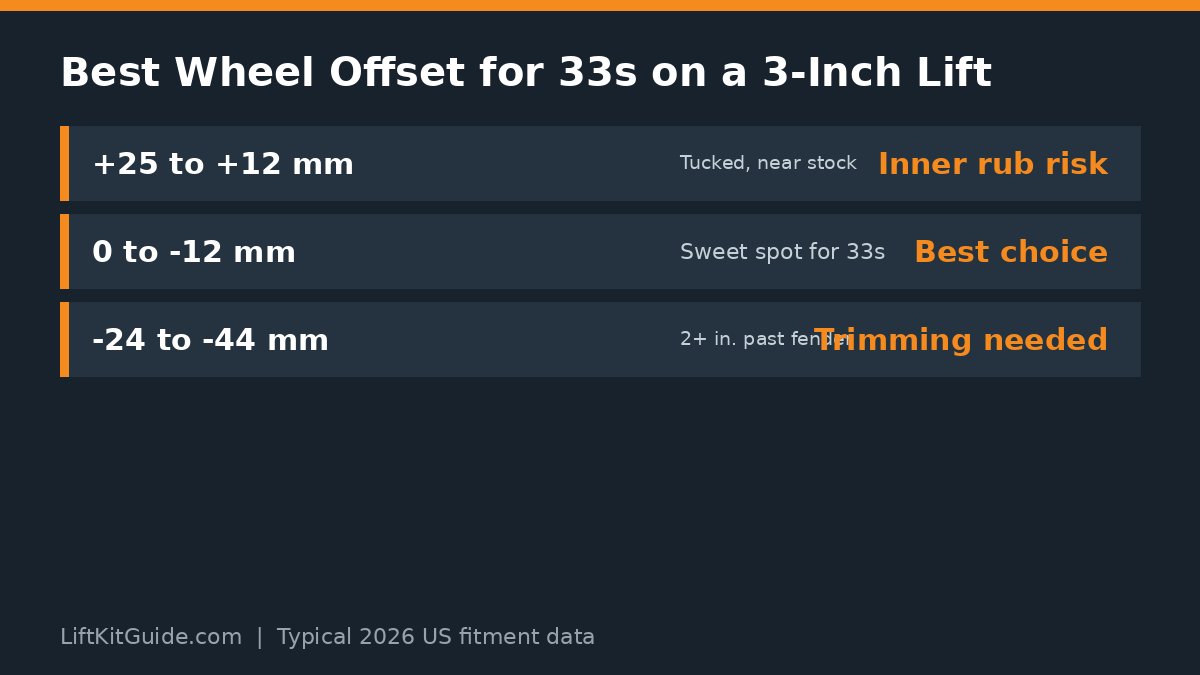
What wheel offset do you need for 33s on a 3 inch lift? For most half-ton trucks and midsize pickups, a 0 to -12mm offset on 17×8.5 or 18×9 wheels is the sweet spot for 33×12.50 tires with a 3-inch lift, usually clearing with no trimming or minor plastic trimming. Factory +18 to +30mm offset tucks 33s too far inward, causing rubbing on control arms and frame at full lock. More negative than -24mm pushes tires far outside the fenders and almost always demands metal trimming.
Key takeaways
- 0 to -12mm offset on 17×8.5 or 18×9 wheels is the proven sweet spot for 33×12.50 tires on a 3-inch lift.
- Factory +18 to +30mm offset tucks 33s inward and causes control-arm and frame rub at full steering lock.
- Backspacing of 4.5 to 4.75 inches on a 17×8.5 wheel equals roughly 0mm offset.
- Offsets more negative than -24mm push tires 2+ inches past the fenders and usually require metal trimming.
- A documented 2020 Tacoma on a 3-inch Rough Country lift clears 33×12.50s on 17×8.5 0-offset wheels with zero trimming.
On this page
What wheel offset do you need for 33s on a 3 inch lift?
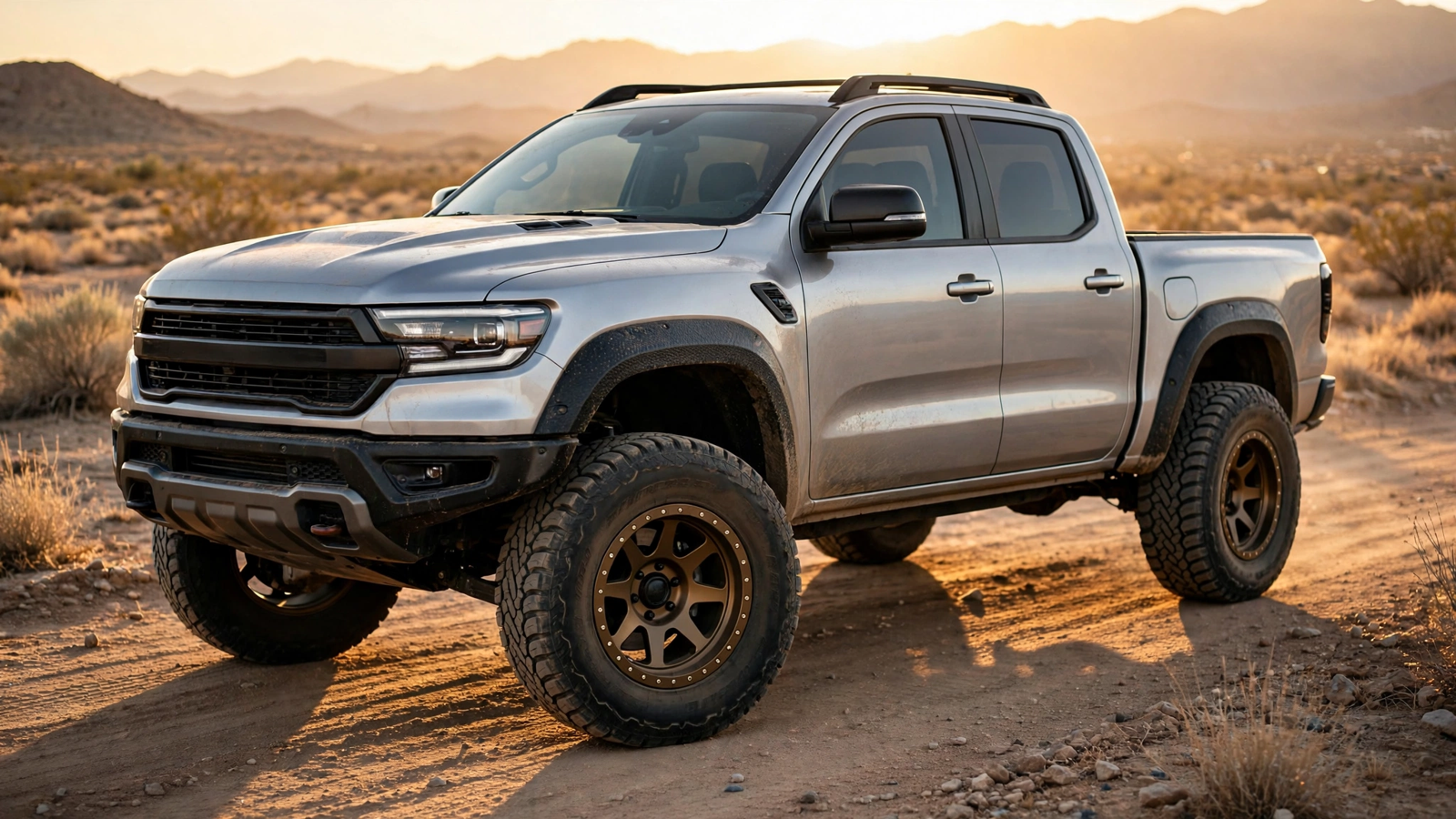
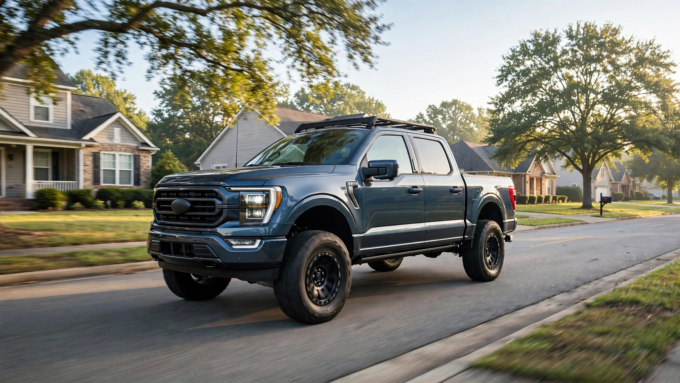
What wheel offset do you need for 33s on a 3 inch lift? Start with 0mm offset on a 17×8.5-inch wheel, which gives about 4.75 inches of backspacing and positions a 33×12.50 tire flush with the fender on most trucks. This combination is the most documented fitment in owner galleries: Tacomas, F-150s, Silverados, and Rams on 3-inch lifts repeatedly clear 33s at 0 offset with no trimming or only minor plastic trimming at full lock. It keeps the tire tucked enough to avoid throwing debris down the body while pushing it out far enough to clear suspension components.
If you want a slightly more aggressive stance, stepping to -12mm offset moves the wheel out roughly half an inch further, which most trucks still tolerate without metal work. The key question behind what wheel offset do you need for 33s on a 3 inch lift is really about the balance between inner clearance and outer poke. Too positive and the inside sidewall hits the upper control arm; too negative and the outer tread catches the fender lip and bumper valance. Staying between 0 and -12mm keeps you in the zone where a 3-inch lift does its job without forcing you to cut sheet metal.
Lift height and offset work as a system, so do not shop for wheels in isolation. A 3-inch lift raises the fender opening enough for the 33-inch diameter, but only the right offset centers the 12.50-inch width in that opening. Owners who pair a quality 3-inch suspension lift kit with 0-offset wheels report the fewest surprises, while those who reuse stock wheels often end up buying wheel spacers later. Measure twice, buy once, and confirm the exact offset before ordering.
How does wheel offset affect tire clearance?
Wheel offset is the distance in millimeters between the wheel’s mounting surface and its centerline, and it decides exactly where the tire sits in the wheel well. Positive offset tucks the wheel inward toward the suspension, zero offset centers it, and negative offset pushes it outward past the fender. On a lifted truck running 33s, every 12mm of offset change moves the tire roughly half an inch in or out, which is often the difference between clearing the upper control arm and rubbing a hole in the inner sidewall.
This matters because a 3-inch lift only creates vertical room; it does nothing for the horizontal crowding around the tire. When owners ask what wheel offset do you need for 33s on a 3 inch lift, they are usually fighting one of two rubs: inner rub against the control arm or frame with stock-offset wheels, or outer rub against the fender liner with very negative wheels. The cost of a 3-inch lift buys you diameter clearance, but offset is what buys you width clearance, and 33×12.50s need both.
Another way to think about what wheel offset do you need for 33s on a 3 inch lift is to work backward from your truck’s known trouble spots. Full-size GM trucks, for example, are notorious for tight clearance at the front crash bars, while Tacomas fight the cab mount first. Owner forums for your specific truck will tell you exactly which offset range cleared 33s on a 3-inch lift without drama. Write down the three most common winning combos you see, note their backspacing, and you will have a short list of wheels that are proven rather than guessed.
| Offset range | Stance | Typical trimming for 33s on 3-inch lift |
|---|---|---|
| +25 to +12 mm | Tucked, near stock | Inner rub likely; spacers or new wheels needed |
| 0 to -12 mm | Flush to slightly aggressive | None to minor plastic trimming |
| -24 to -44 mm | 2+ inches past fender | Metal trimming usually required |
What is the difference between offset and backspacing?
Offset and backspacing describe the same wheel position in different units, and shops in the US still quote both. Offset is measured in millimeters from the wheel centerline, while backspacing is measured in inches from the mounting surface to the inner wheel lip. A 17×8.5 wheel at 0mm offset has about 4.75 inches of backspacing; the same wheel at -12mm offset has about 4.25 inches. Knowing both numbers lets you compare wheels across brands, since some manufacturers list only one.
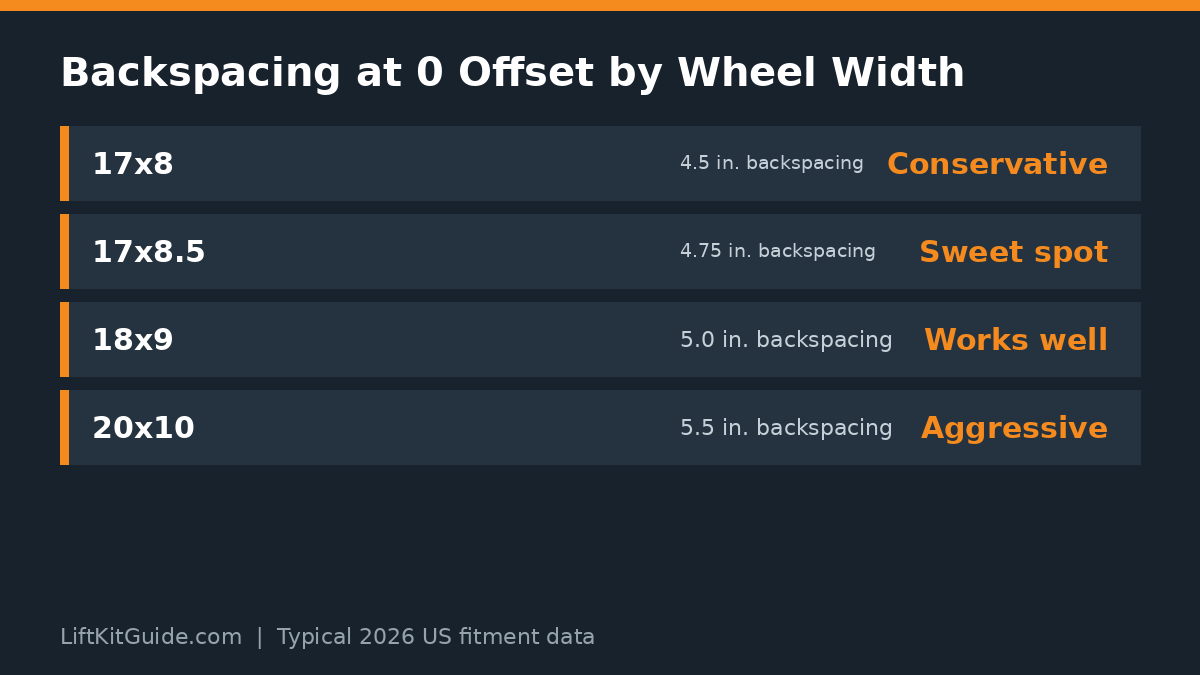
When you are deciding what wheel offset do you need for 33s on a 3 inch lift, convert every candidate wheel to backspacing before comparing. Two wheels can share a 0mm offset yet sit differently if their widths differ: a 20×10 at 0 offset has 5.5 inches of backspacing and pushes the tire further out than a 17×8.5 at 0 offset. Wider wheels amplify every millimeter of negative offset, which is why 20×12 -44 setups look radical but demand serious trimming even with a lift.
| Wheel size | Backspacing at 0 offset | Notes for 33s |
|---|---|---|
| 17×8 | 4.5 in. | Conservative; may need -12mm for flush stance |
| 17×8.5 | 4.75 in. | Sweet spot; most documented no-trim fitments |
| 18×9 | 5.0 in. | Works well; check inner clearance |
| 20×9 | 5.0 in. | Fine at 0 offset; -12mm gets aggressive |
| 20×10 | 5.5 in. | Pushes tire out; expect minor trimming |
| 20×12 | 6.0 in. | Only with very negative offset; major trimming |
What happens if your offset is too aggressive?
Push past -24mm offset with 33s and the problems stack up fast. The tire swings a wider arc when you turn, so the tread catches the front bumper valance, the rear of the fender liner, and eventually the cab mount on Toyotas. Each of those contact points means cutting, and once you start trimming metal you cannot undo it. Aggressive setups also throw rocks and water down the side of the truck, sandblasting rocker panels and doors unless you add flares or mud flaps.
There are also mechanical costs that rarely show up in gallery photos. Pushing the tire outward increases leverage on wheel bearings, ball joints, and tie rods, which is one reason rubbing and fitment problems often come with premature front-end wear. If your state inspects tire coverage, two inches of poke can fail inspection outright. This is why the answer to what wheel offset do you need for 33s on a 3 inch lift stays conservative: 0 to -12mm gives you the look without the cascading compromises.
Insurance and legal issues can follow an overly aggressive setup too. Some states measure tire poke during safety inspections, and tires sticking past the fenders can fail you on the spot. When calculating what wheel offset do you need for 33s on a 3 inch lift, remember that the 0 to -12mm range keeps the tread essentially under the fender on most trucks, which keeps you inspection-friendly. If you do go wider, budget for pocket-style flares, which add roughly an inch of legal coverage per side and cost $300 to $600 painted.
- Tire catches the bumper valance at full lock in parking lots, shaving the tread blocks.
- Fender liner tears where the tread grabs it under compression over bumps.
- Cab mount contact on Tacomas and 4Runners, which requires cutting and welding a chop plate.
- Accelerated ball joint and bearing wear from the extra leverage of a wide track.
- Failed state inspection in states that require tires to stay under the fenders.
What wheel offset do you need for 33s on a 3 inch lift on a Tacoma?
What wheel offset do you need for 33s on a 3 inch lift on a Tacoma? The Tacoma community has converged on 17×8.5 wheels at 0 to -10mm offset as the proven recipe for 285/70R17 or 33×12.50 tires with a 3-inch lift. A well-documented 2020 Tacoma running a 3-inch Rough Country lift on 17×8.5 0-offset wheels with 33×12.50 Toyo Open Country tires clears with no trimming and no rubbing, as cataloged in this TrailBuilt Off-Road fitment gallery. The Tacoma’s tight wheel wells punish both extremes, so this middle ground is genuinely the product of thousands of owner experiments.
Tacoma stock wheels sit around +25mm offset, which is why 33s on factory wheels rub the upper control arm and frame even with a lift. Many owners try 1.25-inch wheel spacers as a stopgap, and spacers do work, but they add another failure point and require retorquing. If you are budgeting the build, price proper 0-offset wheels against the cost of installing the lift itself; doing wheels once is cheaper than spacers now and wheels later. For Tacomas, also budget a possible cab mount chop if you go wider than 285s.
| Tacoma setup (3-inch lift) | Wheel | Result with 33s |
|---|---|---|
| Stock +25mm wheels | 17×7.5 +25 | Rubs UCA and frame; spacers needed |
| 0 offset aftermarket | 17×8.5 0 | No trim; most popular setup |
| -10 offset aftermarket | 17×8.5 -10 | Slightly aggressive; usually no trim |
| -25 or more | 17×9 -25 | Cab mount chop likely required |
Can you fit 33s on stock wheels with a 3-inch lift?
Sometimes, but it depends on the truck and the exact tire. Full-size trucks with generous wheel wells, like certain F-150 and Silverado trims, can squeeze 33×11.50 or narrow 285-wide 33s onto stock wheels with a 3-inch lift and get away with it. The problem is width, not height: a 33×12.50 on a +20mm stock wheel tucks the inside sidewall into the control arm at full lock. Narrower 33s, such as 275/70R18 at roughly 11 inches wide, are far more forgiving on factory wheels.
If you love your stock wheels, hub-centric wheel spacers of 1 to 1.5 inches effectively convert a +25mm offset into the 0 to -12mm range. Quality spacers from reputable brands are safe when torqued properly, but they need retorquing after the first 500 miles and at every tire rotation. For most owners the math favors selling the stock wheels and buying the right offset once, especially since the biggest tire without a lift question shows how many people upgrade wheels and tires together anyway.
There is one more wrinkle worth knowing when you ask what wheel offset do you need for 33s on a 3 inch lift but want to keep factory wheels: some trucks have different stock offsets by trim. A Ram 1500 Rebel wheel is not the same offset as a base Tradesman wheel, and F-150 FX4 wheels differ from King Ranch units. Always measure your actual wheels rather than trusting a forum post about stock offset. A quick backspacing measurement converted to offset takes five minutes and prevents a very expensive wrong guess.
What wheel width works best with 33×12.50 tires?
For a 33×12.50 tire, an 8.5 to 9-inch wide wheel is the sweet spot that tire manufacturers recommend. Mounting a 12.50-wide tire on a 7.5-inch stock wheel pinches the sidewalls, rounds the tread, and can cause bead issues at low off-road pressures. On the other hand, a 10 or 12-inch wide wheel stretches the same tire flat, exposing the wheel lip to rock damage and making the sidewall more vulnerable. When owners ask what wheel offset do you need for 33s on a 3 inch lift, width is the hidden half of the answer.
The 17×8.5 and 18×9 sizes dominate for good reasons beyond fitment: 17-inch wheels open up the huge selection of affordable 33-inch all-terrains, while 18×9 gives a slightly sharper on-road feel. If you already own 20-inch wheels, a 20×9 at 0 to +1 offset still works with 33×12.50s, though expect to pay more per tire. Whatever diameter you choose, keep the width between 8.5 and 9 inches and pair it with 0 to -12mm offset for the least drama.
How do you test-fit wheels before you buy?
Before spending $1,200 or more on wheels and tires, verify fitment with the wheels you are considering. The cardboard template method works: cut the exact diameter and width profile of your planned tire from cardboard, mount it on your current wheel position, and cycle the steering lock to lock while a friend watches the clearances. It is crude, but it reveals control-arm and frame contact that spec sheets miss. Many shops will also test-mount one wheel if you are buying the full set from them.
The smarter move is borrowing data from trucks identical to yours. Search owner galleries for your exact year, model, lift brand, and the offset you want; if five owners run 33s at 0 offset with no trim, you will too. And remember that upper control arms for a 3-inch lift change the clearance picture slightly by repositioning the ball joint, so note whether gallery trucks run stock or aftermarket arms. When in doubt, choose the more conservative offset; you can always add a small spacer, but you cannot return mounted tires.
Finally, photograph everything during your test fit, because the answer to what wheel offset do you need for 33s on a 3 inch lift becomes obvious once you can see the clearances. Shoot the inner sidewall at full lock both directions, the fender gap at ride height, and the bumper valance from below. Those photos also help the alignment shop understand your setup and give you a baseline to compare against after 5,000 miles of driving. Owners who document their fitment rarely get surprised by rub that develops as suspension settles.
Frequently asked questions
What is the best offset for 33s on a 3-inch lift?
A 0 to -12mm offset on 17×8.5 or 18×9 wheels is the best all-around choice for 33×12.50 tires with a 3-inch lift. This range clears suspension components, usually needs no trimming, and gives a flush to slightly aggressive stance on most trucks.
Will 0 offset wheels rub with 33s and a 3-inch lift?
Usually not. Zero offset on an 8.5 to 9-inch wheel is the most documented no-rub setup for 33s on a 3-inch lift across Tacoma, F-150, Silverado, and Ram platforms. Minor plastic trimming at full lock is the worst most owners report.
Is -12 offset too much for 33s?
No, -12mm is still in the safe zone for 33s on a 3-inch lift. It pushes the tire about half an inch further out than 0 offset for a more aggressive look. Most trucks clear it with no metal trimming, though full-size trucks with tight liners may need minor plastic work.
Can I run 33s on stock rims with a leveling kit instead of a lift?
Narrow 33s like 275/70R18 can work on stock wheels with a leveling kit instead of a lift on some trucks, but 33×12.50s usually rub the control arms because of the positive factory offset. A 3-inch lift plus proper offset wheels is the reliable combination.
Does wheel offset affect alignment?
Offset itself does not change alignment angles, but very negative offset increases scrub radius, which can make steering feel heavier and more darty. Get an alignment after any lift and wheel change, and expect the shop to set slightly more caster to compensate.
What backspacing equals 0 offset on a 17×8.5 wheel?
About 4.75 inches. Backspacing equals half the wheel width plus the offset converted to inches, so a 17×8.5 wheel at 0mm offset measures roughly 4.75 inches from the mounting face to the inner lip.
The bottom line
Wheel offset decides whether your 33s clear cleanly or rub constantly, and the 3-inch lift only solves half the puzzle. Stick with 0 to -12mm offset on 8.5 to 9-inch wheels and you will join the thousands of owners running 33×12.50s with no trimming and no drama. It is the fitment the community has already debugged for you.
Resist the urge to go more aggressive than -12mm unless you have budgeted for trimming, flares, and faster front-end wear. Buy the right wheels once, verify with owner galleries for your exact truck, and get an alignment after everything is installed. Your 33s will fit, look right, and stay quiet.



Leave a comment