


Last updated: October 2026 Written by the LiftKitGuide Team, truck suspension installers and editors
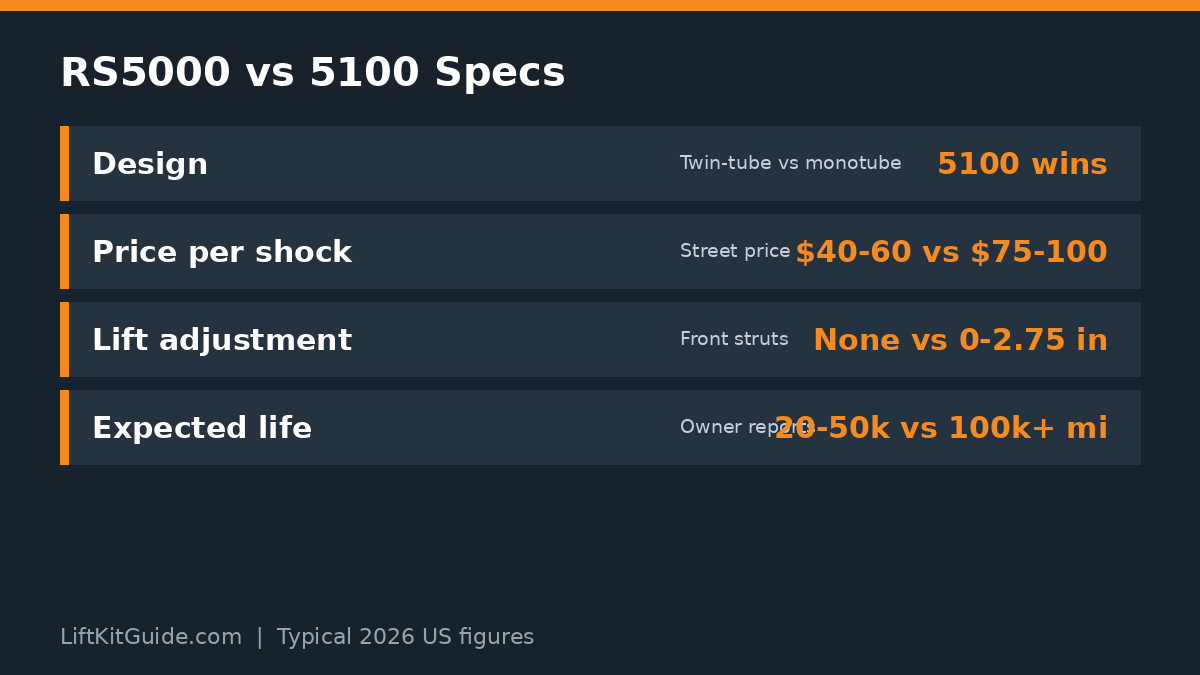
Rancho RS5000 vs Bilstein 5100: the Bilstein 5100 is the better shock for nearly every buyer. The 5100’s 46mm monotube design with digressive valving resists fade, lasts 100,000-plus miles, and is tuned per application, while the RS5000’s twin-tube oil design is cheaper (roughly $40-$60 per shock versus $75-$100) but fades sooner and wears faster according to owner consensus. Buy Rancho only when the budget is absolute king; stretch to Bilstein for everything else.
Key takeaways
- Bilstein 5100s cost roughly $75-$100 per shock; Rancho RS5000s run about $40-$60 — the Bilstein premium is roughly $120-$160 per set of four.
- The 5100 is a 46mm monotube with digressive valving and zinc coating; the RS5000 is a twin-tube, oil-filled shock with 10-stage valving and a 16mm rod.
- Monotube resists fade far better: owners report Bilsteins lasting 100,000+ miles, while Ranchos are often described as wearing out noticeably sooner.
- Bilstein 5100 front struts offer snap-ring height adjustability (0-2.75 inches); the RS5000 offers no lift adjustment.
- Both carry limited lifetime warranties, but warranty length matters less than how long the shock actually performs.
On this page
What are the Rancho RS5000 and Bilstein 5100?
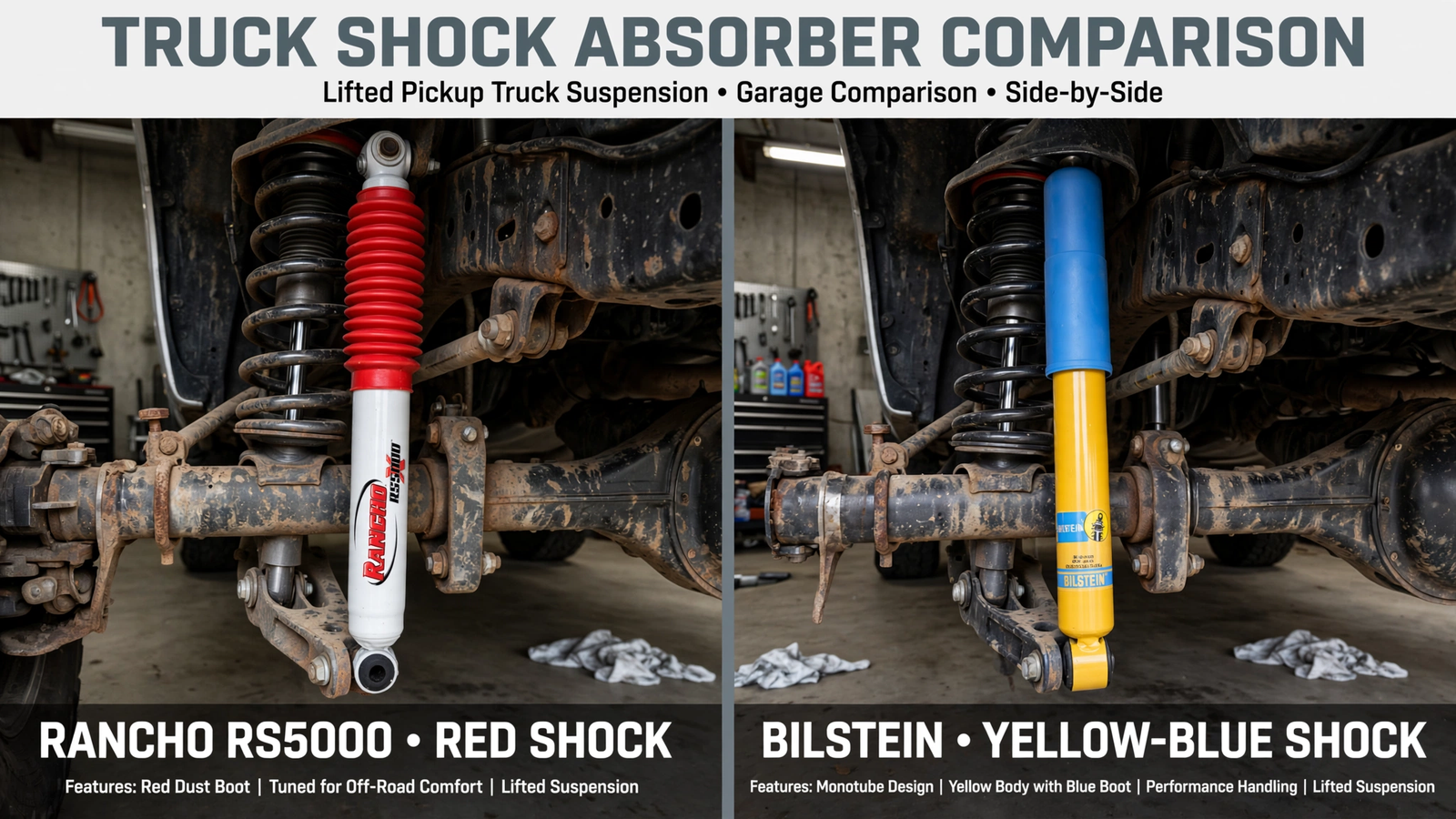
The Rancho RS5000 is the shock that started Rancho’s reputation more than 25 years ago: a twin-tube, oil-filled damper with 10-stage valving, a 16mm piston rod, and the brand’s signature red boot. It is sold as a durable, affordable replacement for stock and lifted applications alike, backed by a limited lifetime warranty. For decades it was the default ‘good enough’ shock at the tire shop counter, and its low price — often under $50 a corner — keeps it selling.
The Bilstein 5100 (B8 5100 series) is the benchmark against which every budget performance shock is judged: a 46mm monotube, gas-pressurized damper with patented digressive valving, zinc-coated body, and application-specific tuning. Front 5100 struts add snap-ring grooves for 0 to 2.75 inches of lift adjustment. In the rancho rs5000 vs bilstein 5100 debate, you are comparing two different engineering philosophies — inexpensive twin-tube comfort versus monotube performance — at prices only about $35 per corner apart.
Both shocks target the same buyer — the owner who wants better-than-stock damping without race-shock money — but they arrive from opposite directions. Rancho built its name on affordable toughness for the masses; Bilstein built its name on German monotube engineering trickling down from motorsport. In the rancho rs5000 vs bilstein 5100 origin story, you are choosing between a legacy of value and a legacy of performance, and the price gap between them has never been smaller than it is today.
Rancho RS5000 vs Bilstein 5100: how do the designs compare?
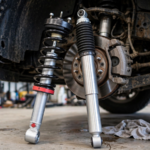
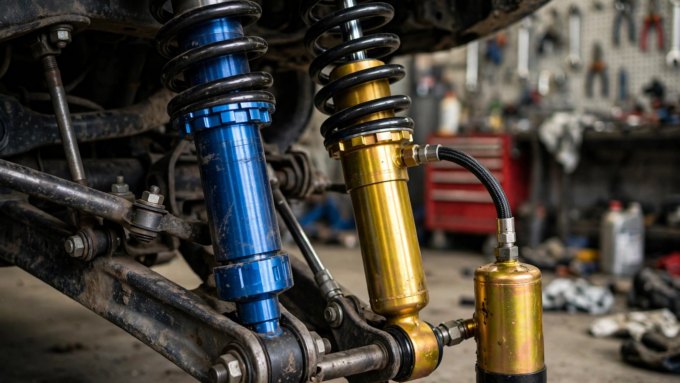
The core difference is monotube versus twin-tube, and it affects everything. The Bilstein 5100’s monotube design puts a large 46mm piston in a single tube with high-pressure nitrogen behind a floating piston, which keeps oil and gas separated so the shock cannot aerate and fade. The digressive valving reacts instantly to small inputs while staying composed over big hits — the reason 5100s feel controlled without feeling harsh. Heat dissipates through the single tube wall directly to airflow.
The Rancho RS5000’s twin-tube design nests the working cylinder inside an outer reservoir tube filled with oil at low pressure. It is cheaper to build and more forgiving of dents, and Rancho’s 10-stage valving gives decent tuning range. But twin-tubes aerate under sustained hard use — the oil foams, damping fades, and the shock effectively gets softer the harder you drive. Around town you may never notice; on a long washboard road or towing in heat, the rancho rs5000 vs bilstein 5100 gap becomes obvious within miles.
The practical consequence of aeration deserves emphasis because it is invisible until it bites. A twin-tube that has foamed its oil does not clunk or leak — it just stops controlling the wheel, so the truck feels floaty and vague exactly when you need precision most. Monotubes can fade too under extreme abuse, but the threshold is far higher. For drivers who will never push that threshold, the rancho rs5000 vs bilstein 5100 design debate is academic; for everyone else, it is the whole decision.
| Spec | Rancho RS5000 | Bilstein 5100 |
|---|---|---|
| Design | Twin-tube, oil-filled | 46mm monotube, gas-charged |
| Valving | 10-stage | Digressive, patented |
| Piston rod | 16mm | Larger, hardened |
| Body coating | Painted + red boot | Zinc-coated |
| Lift adjustability | None | 0-2.75 in. (front struts) |
| Typical price | $40-$60/shock | $75-$100/shock |
| Warranty | Limited lifetime | Limited lifetime |
How much do Rancho RS5000 and Bilstein 5100 shocks cost?
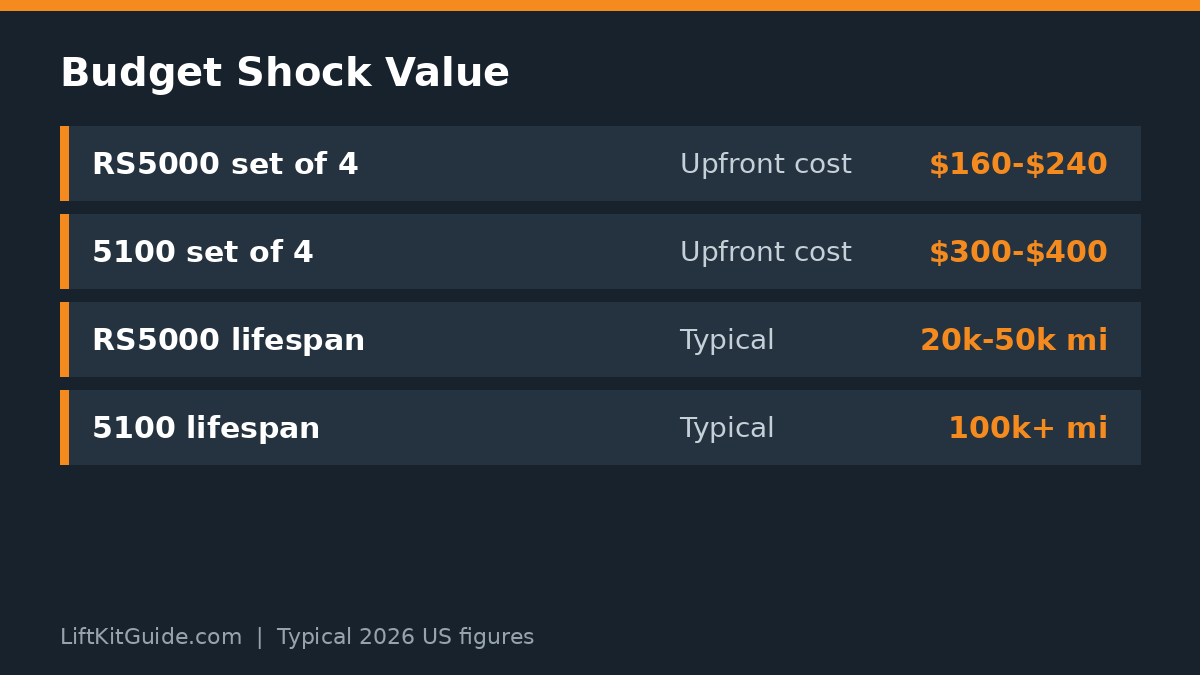
Street pricing tells a clear story: Rancho RS5000s routinely sell for $40 to $60 per shock, putting a set of four at $160 to $240. Bilstein 5100s run $75 to $100 per corner, or $300 to $400 per set. The real-world gap is roughly $120 to $160 for the full truck — meaningful on a tight budget, but small relative to a lift kit that costs ten times as much. This narrow gap is why so many owners who start shopping Rancho end up buying Bilstein.
Think about the price per mile, not per shock. Owners routinely report 100,000-plus miles from 5100s that still damp properly, while RS5000s are frequently described as tired well before that — one owner’s Ranchos lasted 20,000 miles on a heavy-duty truck. At those lifespans, the Bilstein costs less per mile despite the higher sticker. Our cost to lift a truck guide shows shocks are a small fraction of total build cost, which makes cheaping out on dampers one of the worst values in the sport. See also what lifting really costs before budgeting.
Watch for kit pricing versus individual shock pricing when shopping. Some retailers bundle four 5100s at a meaningful discount, narrowing the gap to Rancho to barely $100, while others list optimistic Rancho prices that exclude the boots or hardware. Compare complete, like-for-like carts — four corners, same truck, shipped — before declaring a winner on price. Sales rotate constantly, so the rancho rs5000 vs bilstein 5100 gap you see today may be $80 or $200 tomorrow.
Which rides better on the street?
For pure around-town comfort on a stock-height truck, the Rancho RS5000 is genuinely pleasant — the twin-tube design and softer valving absorb small chatter with a cushy feel many drivers like. If your truck never leaves pavement, never tows heavy, and you simply want fresh dampers cheap, the Rancho’s ride will satisfy you. There is a reason it sold for 25 years: for undemanding use, it is fine.
The Bilstein 5100 rides firmer, and that firmness is the point. Digressive valving keeps the truck flat in corners, controlled over speed bumps, and stable when loaded — the ‘connected’ feel owners describe after switching. The rancho rs5000 vs bilstein 5100 street verdict depends on your priority: Rancho for soft and cheap, Bilstein for controlled and lasting. Most enthusiasts who try both never go back to twin-tubes, which is why forum advice skews so heavily Bilstein.
Passenger feedback is a surprisingly useful test. Ask a passenger to ride in the back seat over the same rough road with each setup and the verdict is usually instant: the Rancho feels softer initially but bouncier over repeated hits, while the Bilstein feels firmer at first and more settled the rougher it gets. That second impression is what matters on long trips, and it is where digressive valving earns its reputation one mile at a time.
Which lasts longer: Rancho or Bilstein shocks?
Longevity is the Bilstein 5100’s strongest argument and the Rancho’s weakest. The monotube’s gas pressure, hardened components, and zinc coating are built for the long haul — 100,000-mile sets are commonplace in owner reports, including on 7,200-pound diesel trucks that punish dampers. The zinc body resists the corrosion that kills painted shocks in salt states, and the design has fewer wear modes than a twin-tube.
Rancho’s twin-tube wears faster by design: more seals, aeration-prone oil, and a painted body that chips. Owner reports of RS5000s going soft at 20,000 to 50,000 miles are common enough to be a pattern, not anecdotes. Both carry limited lifetime warranties, but a warranty replaces a dead shock — it does not refund the labor to install it twice. In the rancho rs5000 vs bilstein 5100 durability contest, Bilstein wins by a wide margin, and the per-mile cost math favors it heavily.
Do not ignore the boot and bushing details either. Rancho’s signature red boot protects the rod but traps moisture and grit against the seal in muddy use — many owners remove it. Bilstein ships without a boot, relying on the hardened rod and wiper seal, which stays cleaner in practice. Small details, but they accumulate over 100,000 miles, and they illustrate the different design priorities behind each shock.
- Corrosion: Bilstein’s zinc coating outlasts Rancho’s paint in salt-belt winters — inspect painted shocks yearly.
- Seal wear: twin-tubes have more seals and aerate sooner; monotubes stay consistent far longer.
- Heat: sustained towing or washboard roads fade twin-tubes first; monotubes dissipate heat better.
- Installation labor: shocks cost $100-$200 per axle to install — a shock you replace twice costs more than a good one once.
- Warranty reality: lifetime warranties cover defects, not wear; buy the shock that wears slowest.
Rancho RS5000 vs Bilstein 5100 for a lifted truck?
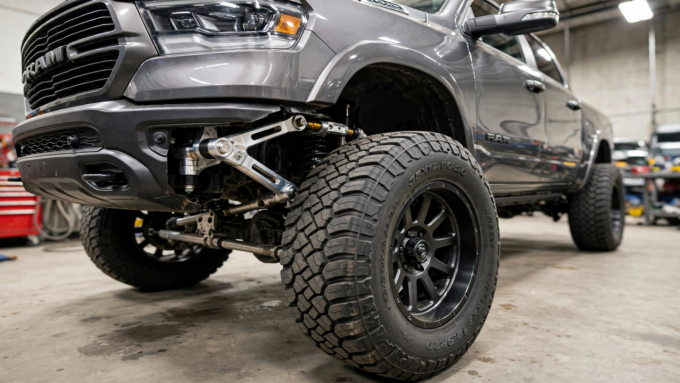
Lifted trucks raise the stakes, and the Bilstein advantage grows. The 5100 line includes extended-length versions engineered for specific lift heights — the part numbers exist because Bilstein actually validates fitment — plus front struts with snap-ring height adjustment from 0 to 2.75 inches. That adjustability alone can replace a spacer lift up front, saving money and preserving ride quality. Rancho’s RS5000 comes in lifted applications too, but without height adjustment and with the same twin-tube fade limitations.
Heat is the hidden killer on lifted trucks: bigger tires, more unsprung weight, and harder off-road use all make shocks work hotter, exactly where monotubes shine. A leveled truck on 35s with twin-tubes will feel the fade on a long dirt descent that 5100s shrug off. For any lift beyond a basic level, the rancho rs5000 vs bilstein 5100 answer is Bilstein without hesitation — the use case plays directly to monotube strengths. See suspension lift kits for matching shocks to lift height, and leveling versus lift basics if you are still choosing.
One more lifted-truck consideration: shock length must match your actual lift, not the advertised kit height. A ‘6-inch kit’ that nets 5 inches of lift needs different shocks than one that nets 6.5, which is why Bilstein publishes application-specific extended lengths rather than generic sizes. Measure your lift at the hub, then buy the shock valved and sized for it — guessing is how trucks end up with topped-out or bottomed-out dampers.
| Use case | Rancho RS5000 | Bilstein 5100 |
|---|---|---|
| Stock daily driver | Good, cheap, comfy | Great, firmer, lasting |
| Leveled truck | Adequate | Better + height adjust |
| Lifted 3-6 in. | Fades, wears fast | Extended lengths available |
| Towing/hauling | Soft, wallowy | Controlled, stable |
| Salt-belt winters | Paint chips, rusts | Zinc resists corrosion |
| Cost per mile | Higher (short life) | Lower (100k+ miles) |
Are there better budget options than both?
The honest answer is that the Bilstein 5100 is the budget option — the step below it is not worth taking for most trucks. But two alternatives deserve mention. The Rancho RS9000XL adds 9-position adjustability to the twin-tube platform for modest money, and owners who actually use the knob like the versatility, though the adjuster can freeze with age. The Bilstein 4600 is the stock-height sibling of the 5100 with the same monotube quality at a slightly lower price and no lift settings.
Above both sits the real upgrade: Bilstein 6112/5160, Fox 2.0, and Eibach Pro-Truck, running $600 to $1,200 per set with meaningfully better damping. The rancho rs5000 vs bilstein 5100 debate lives at the entry level; if your budget stretches even slightly, the 6112 front coilover assembly is the single best value in truck suspension. Our best lift kit brands ranking covers where each tier fits, and installation costs helps budget the full job.
If you are tempted by the RS9000XL’s adjustability, go in with realistic expectations. Nine positions sound versatile, but most owners find two or three usable settings and report the adjuster stiffening with age and corrosion. It is a nice feature on a truck whose loads vary wildly, but it does not transform the twin-tube fundamentals. Adjustability is no substitute for the right base design.
Which budget shock should you actually buy?
Buy the Bilstein 5100 unless your budget truly cannot stretch the extra $120 to $160 per set. It rides better loaded, lasts two to five times longer, resists corrosion and fade, and offers front height adjustability the Rancho cannot match. The per-mile cost is lower, the forum consensus is overwhelming, and you will install shocks once instead of twice. For lifted trucks, tow rigs, and salt-belt trucks, it is not even close.
Buy the Rancho RS5000 only in narrow cases: a stock-height truck that will never tow or leave pavement, a beater you plan to sell within two years, or a budget so tight the $150 difference genuinely matters. Even then, consider the 5100 a $150 insurance policy against doing the job twice. In the rancho rs5000 vs bilstein 5100 decision, the cheaper shock is only cheaper on the receipt — the Bilstein is cheaper everywhere else.
A final word on installation: whichever you choose, replace shocks in axle pairs at minimum, and ideally all four at once. Mixing a fresh monotube with three worn twin-tubes produces bizarre handling that owners misdiagnose as alignment or tire problems. Fresh shocks also deserve fresh mounting hardware — a $15 hardware kit prevents the seized-bolt nightmare that turns a two-hour job into a weekend.
Frequently asked questions
How much do Bilstein 5100 shocks cost?
Bilstein 5100s typically cost $75 to $100 per shock, or roughly $300 to $400 for a set of four. Front 5100 struts with snap-ring height adjustability run slightly more than rear shocks.
How much do Rancho RS5000 shocks cost?
Rancho RS5000s typically cost $40 to $60 per shock, or about $160 to $240 for a set of four — roughly half the price of Bilstein 5100s up front, though they generally wear out sooner.
Are Rancho RS5000 shocks good?
They are adequate for undemanding use — stock-height daily drivers that never tow or off-road. But twin-tube fade, shorter life (often 20,000-50,000 miles in hard use), and no height adjustability make them a poor value next to the Bilstein 5100 for most trucks.
How long do Bilstein 5100 shocks last?
Owner reports of 100,000-plus miles are common, including on heavy diesel trucks. The monotube design, hardened components, and zinc coating give the 5100 exceptional longevity for a shock in its price class.
Can Bilstein 5100s lift my truck?
Front 5100 struts offer snap-ring height adjustment from 0 to 2.75 inches depending on application, which can level most trucks without spacers. Rear 5100s are length-specific and do not provide lift on their own.
What is the difference between monotube and twin-tube shocks?
A monotube shock uses a single tube with high-pressure gas behind a floating piston, resisting fade and heat. A twin-tube nests the working cylinder inside an outer oil reservoir — cheaper and softer, but prone to aeration and fade under hard use.
The bottom line
Rancho RS5000 vs Bilstein 5100 is one of the clearest verdicts in truck suspension: the Bilstein wins on ride control, longevity, corrosion resistance, fade resistance, and adjustability, at a premium of only about $120 to $160 per set. The Rancho’s lower sticker price evaporates the moment you factor in shorter life and repeat labor.
Buy Rancho only for undemanding stock-height use on a strict budget. For lifted trucks, tow rigs, and anyone keeping their truck past 50,000 miles, the Bilstein 5100 is the cheapest shock you will ever buy — because you will only buy it once.



Leave a comment